


When Young People Return Home…
Amid the pace of modern life, many ethnic minority youths in Lam Dong are choosing a different path: leaving urban jobs behind to return to their villages and breathe new life into traditional crafts. Their decisions not only help preserve cultural heritage but also spark new livelihoods and economic opportunities within their own communities.
Preserving the Spirit of Brocade
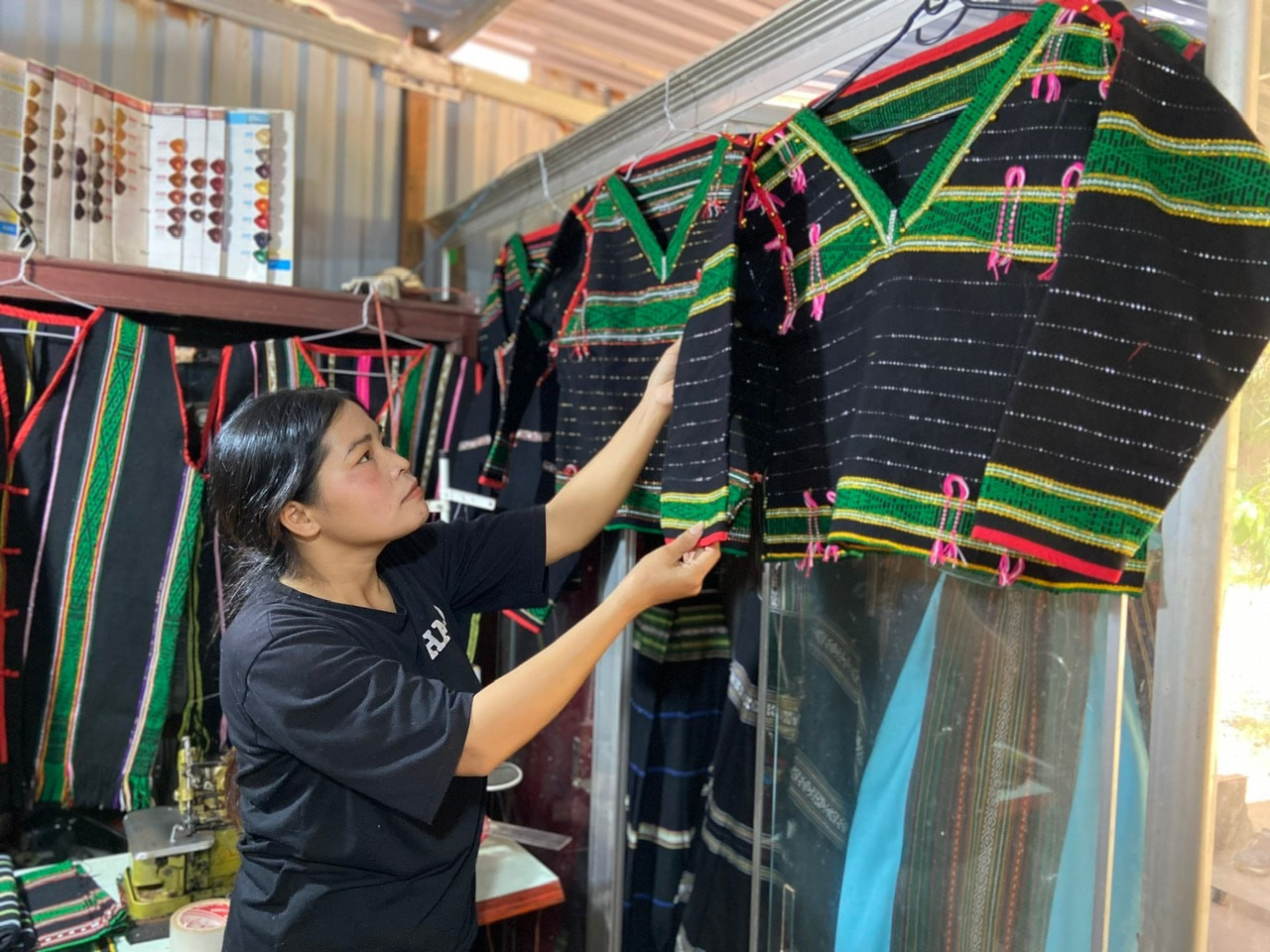
The dirt road leading into Bu Dak hamlet (Thuan An commune) is as quiet as the rhythm of life here. Inside a small house, the steady hum of H’Her’s sewing machine fills the room. Few would guess that the M’nong woman once considered leaving her hometown in search of work. But after completing a sewing course offered locally, she chose to stay and build a future from the brocade craft handed down through generations.
Drawing inspiration from traditional M’nong patterns, she has created modern designs such as contemporary dresses, ao dai made from brocade, handbags, and small accessories. Each product preserves the cultural essence of the M’nong people while meeting modern tastes. Her small shop has gradually become a gathering place for young artisans in the hamlet, all sharing the same desire to keep the craft alive.
For H’Her, success is not just selling more products—it is ensuring that more people learn about and appreciate M’nong brocade. When brocade is valued, young people take pride in their heritage.
From Jars of Ruou Can to a Stable Family Livelihood
In Jráh hamlet (Kien Duc commune), the story of Thị Hà Ri Na reflects determination and the willingness to seize opportunity. Refusing to accept poverty as fate, she spent years visiting other models to learn and explore new ways of doing business. In 2017, she began producing ruou can, traditional jar-fermented rice wine, with a small-scale batch of around 50 jars. Initially, it was both a way to preserve the craft and supplement her income.
Seeing its potential, she decided in 2019 to take out a youth startup loan and expand production by adding 200 jars and diversifying into dried wild bananas. Ri Na’s ruou can follows traditional M’nong methods, capturing the distinct flavor passed down from her elders. Today, under the brand “M’nong Rice Wine,” she produces 50 to 100 jars per batch, priced from 500,000 to 1.5 million VND each. With two to three production cycles a year, her family earns around 200 million VND after expenses.
Beyond production, she actively participates in events organized by local Youth Union and Women’s Union chapters, earning recognition as an outstanding young entrepreneur in her community.
Sustaining a Legacy Through Youthful Dedication
For Y Phích Priêng of Nui hamlet (Cu Jut commune), ruou can making is more than a livelihood, it is a passion nurtured in his mother’s kitchen. More than a decade ago, a single jar made as a gift for a friend inspired him to consider developing the craft into a business. He learned the work by observing each step his mother took: selecting jars, cleaning and drying them, cooking rice, mixing yeast, and sealing the jars for fermentation.
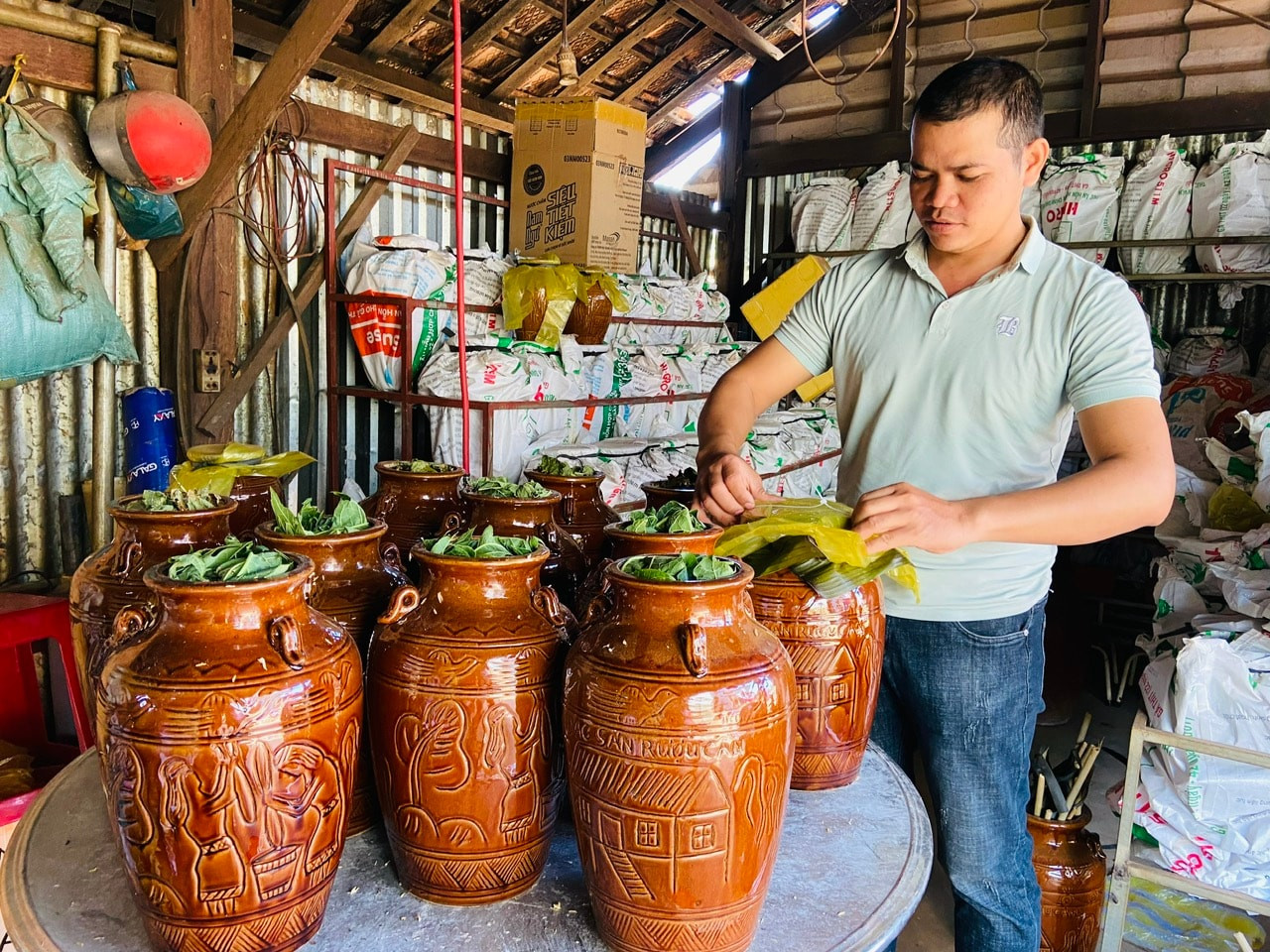
His early batches were inconsistent, sometimes sour or bitter, but he persisted. Through countless trials, he perfected his technique, crafting jars of wine praised by neighbors for their rich, authentic flavor. Orders increased, especially during festivals and holidays, but he refused to sacrifice quality for quantity. To him, the integrity of the craft comes first.
Among the E de people, ruou can is not merely a beverage; it is the soul of festivals and a symbol of unity and celebration. Preserving the craft is, therefore, preserving their cultural identity.
Heritage Revived by New Aspirations
According to the Provincial Department of Ethnic Affairs and Religion, various youth and social organizations have supported ethnic minority entrepreneurs by providing training, information, and project development guidance. These efforts have helped many young people create innovative models and build stable incomes in their hometowns.
For youths like H’Her, Ri Na, and Y Phích, traditional crafts are no longer relics of the past. Through creativity, determination, and a desire for change, they are bringing these crafts back to life—ensuring that heritage is not only preserved but carried forward by a new generation.