

Where Steps End, Aspirations Take Flight
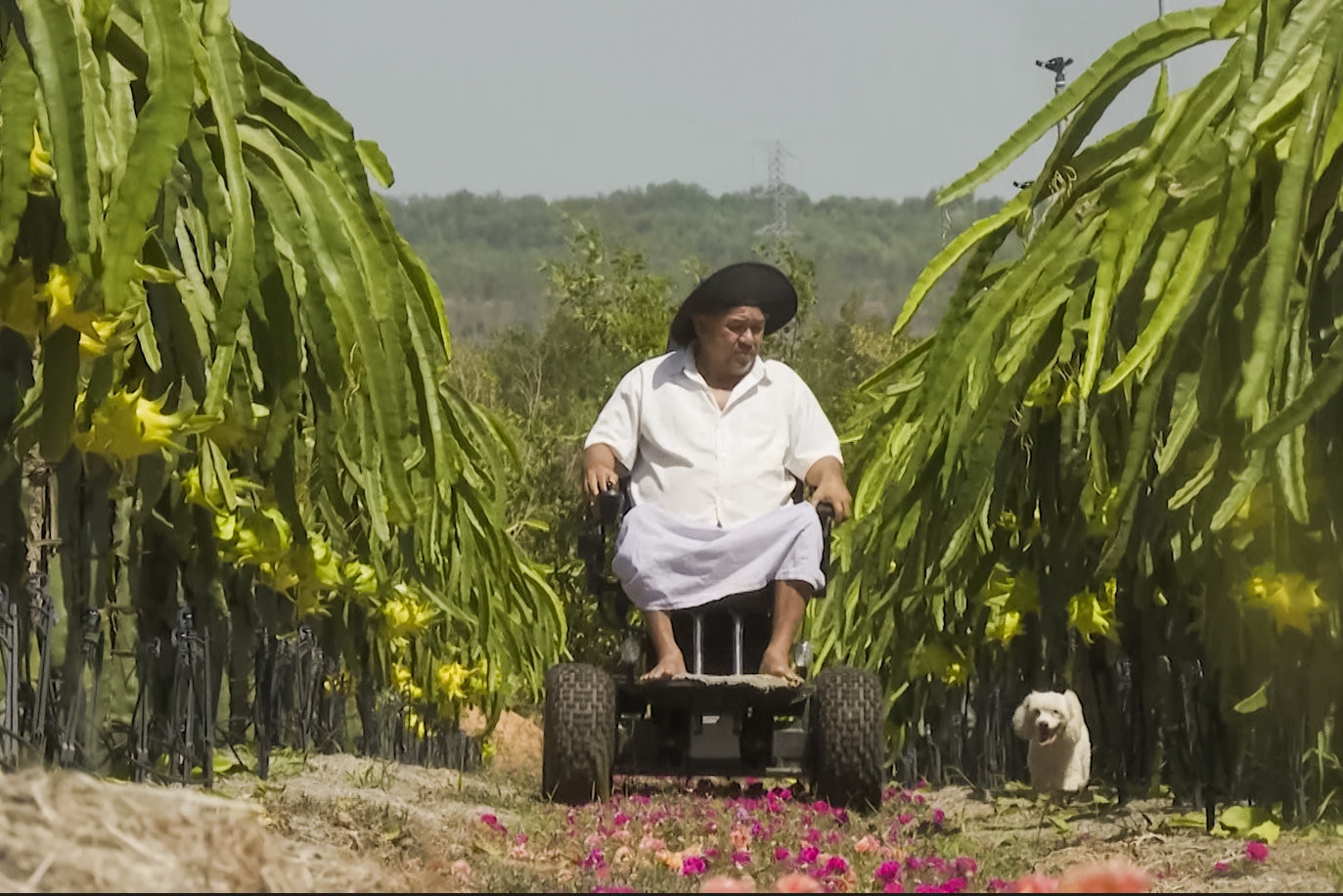
Amid the vast, barren sands of Ham Thuan in eastern Lam Dong Province, Ngo Van Binh has built a remarkable agricultural venture despite losing the ability to walk, transforming once-parched land into a thriving “Golden Dragon” dragon fruit farm.
A Cruel Turn of Fate and the Power of Family Love
At 36, an age when life is often filled with ambition and unfulfilled career aspirations, Ngo Van Binh of Ham Thuan, Lam Dong, was suddenly struck by a severe illness. Meningitis left the once-strong man critically ill.
When the last hopes for his recovery at Cho Ray Hospital faded, doctors could do no more and sent him home to his family to prepare for the worst, as his remaining time was believed to be measured in hours.
.jpg)
At the time, both of Binh’s parents had already passed away, leaving his siblings as his only source of support. With his life hanging by a thread, his elder brother and younger sister refused to give up.
Overcome with grief, they clung to their faith and their family bond. Following the hopeful advice of a Buddhist monk, the two embarked on an extraordinary journey, visiting and praying at 99 ancient pagodas in the hope that Binh’s life might be spared, even if the price was permanent paralysis.
.jpg)
Medicine may describe it as a remarkable recovery from meningitis. For Binh’s family, however, it was nothing short of a miracle born of deep family bonds and unwavering Buddhist faith.
Binh survived, but at a devastating cost. He permanently lost sensation in both legs and was left unable to have children. Recalling that period, Ngo Van Binh said: “When I woke up and realised I was still alive but would be paralysed in both legs for the rest of my life, I was completely devastated. I did not want to do anything. I only wanted to give up on life. But when I thought of my family around me, I knew I had to live a meaningful life.”
His elder brother, Ngo Van Chua, recalled: “When he learned that his younger sister and I had travelled to 99 pagodas to pray for his life, he realised that his life was no longer his alone. He had to stay strong so as not to let us down.”
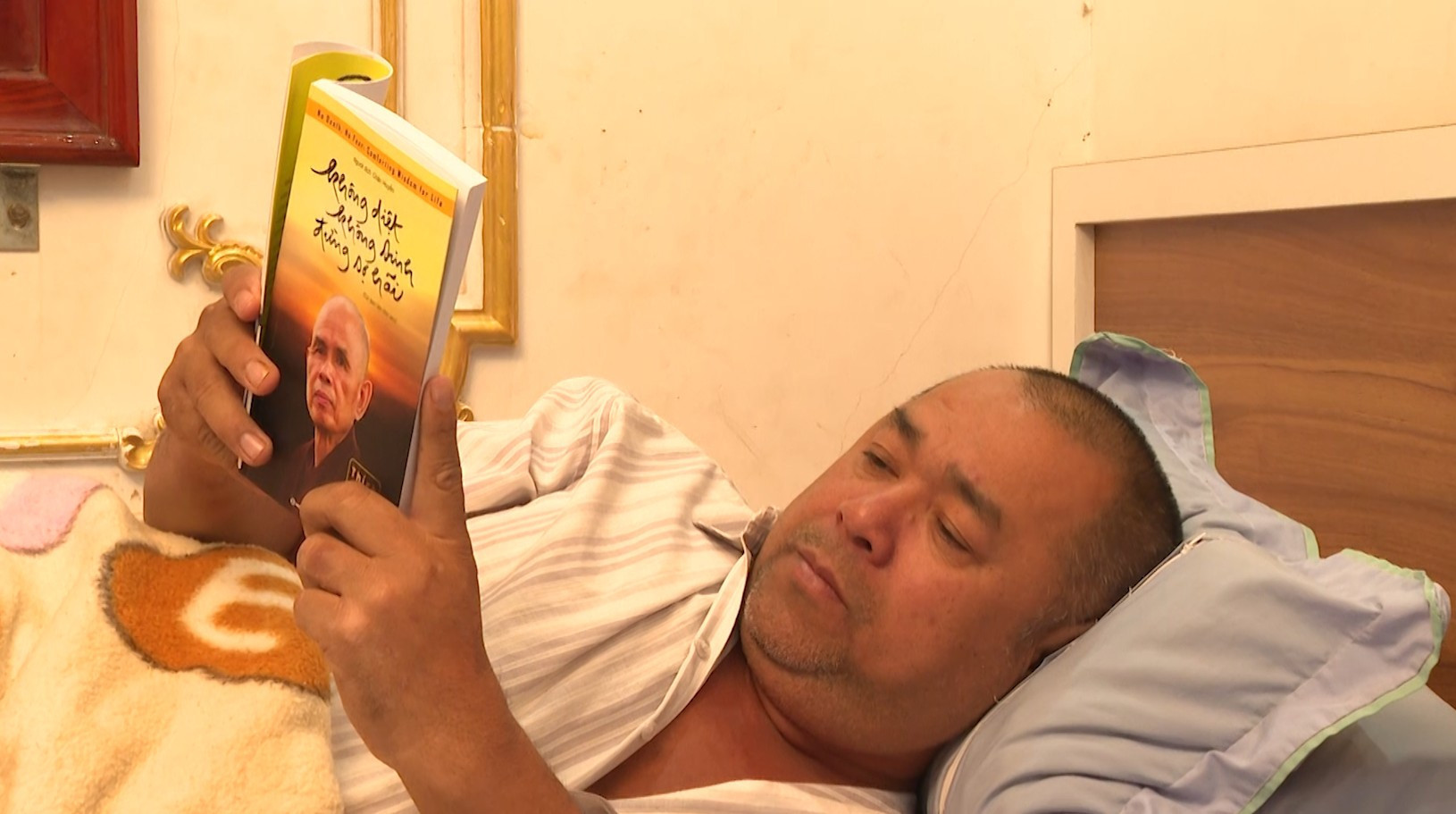
In the darkest days after losing the use of his legs, Binh often reflected that adversity could also be a test that helps people find the strength to rise again. During those difficult years, the encouragement, faith and affection of those around him helped sustain him and gave him the strength to move forward. He also took to heart the message of Zen Master Thich Nhat Hanh’s book No Death, No Fear. Through its teachings, Binh came to believe that finding true inner peace could make him stronger and more resilient, helping him face whatever life brought him with a smile and live in a way that could also inspire and support others.

As the writer Helen Keller once said, “When one door closes, another opens.” For Binh, those words have become a source of strength. He continues to look ahead with hope and remain open to new possibilities in life, believing that hope and motivation can give him the strength to overcome adversity.
A Battle Against the Barren Sands
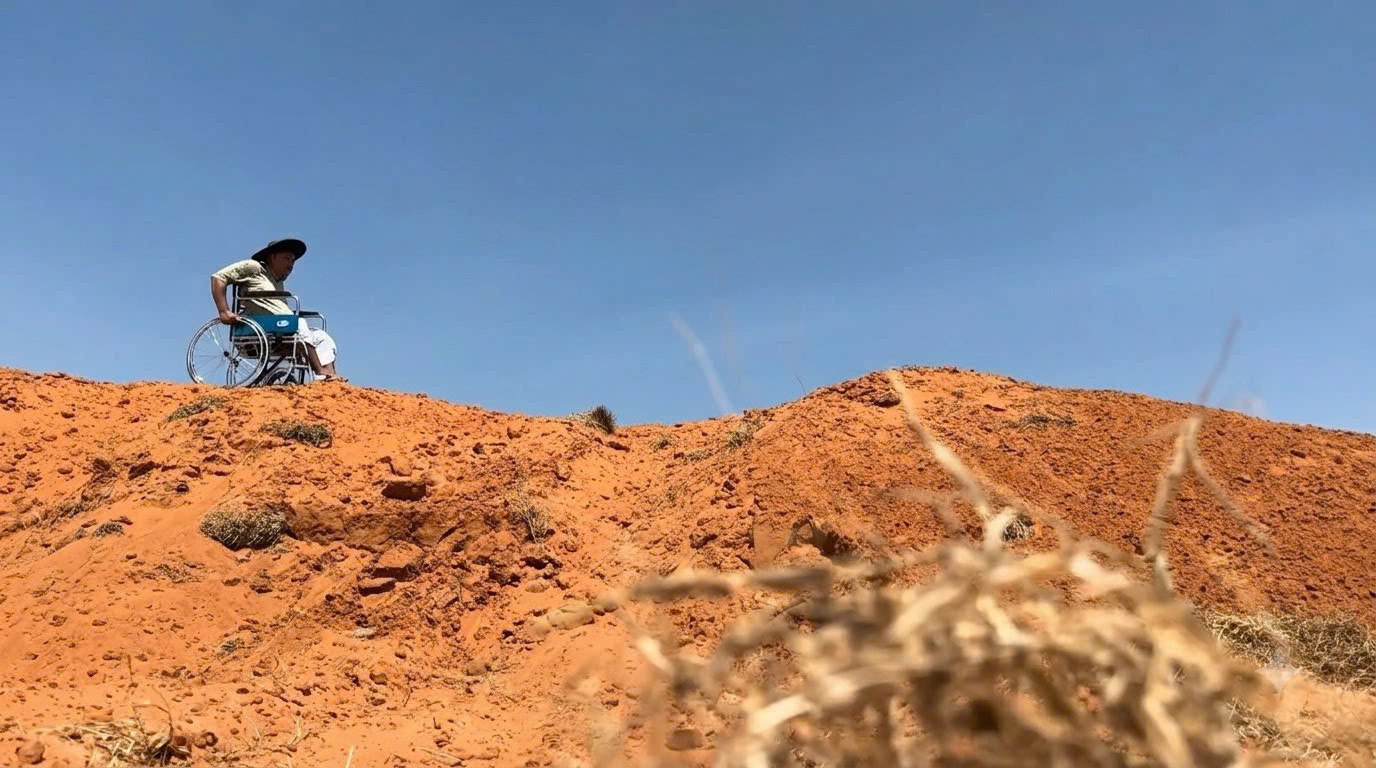
The barren sandy lands of Ham Thuan in eastern Lam Dong Province have never been kind to those struggling to make a living. The climate is harsh, with little rain and relentless sunshine. Known as a land of shifting sands, the area is so dry and infertile that few plants can take root and survive.
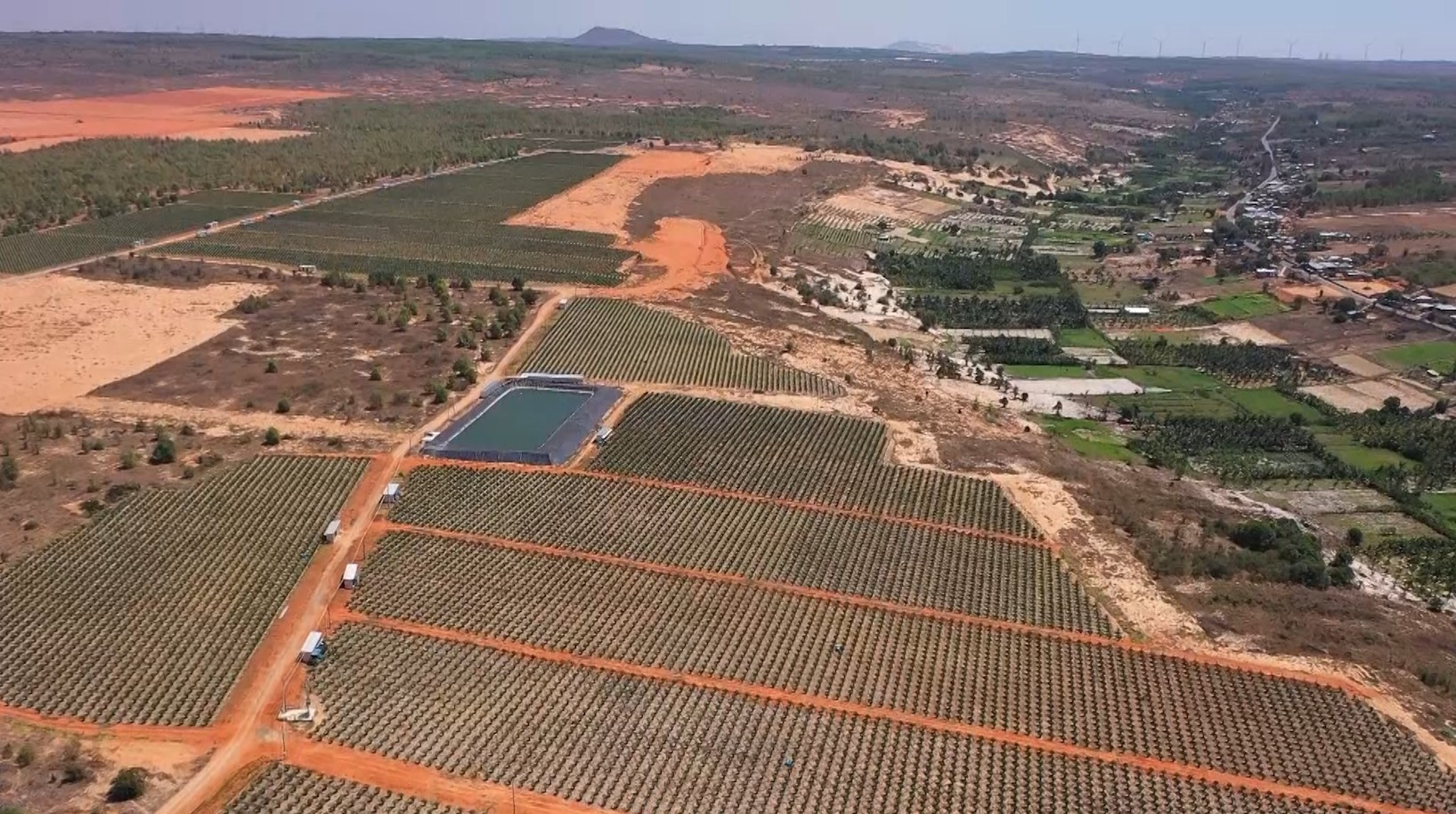
In 2017, the man in the wheelchair made a bold decision that left many astonished. He bought more than 1,000 hectares of barren coastal sandy land in Ham Thuan Commune to launch a new venture cultivating a new dragon fruit variety alongside orchard tourism.
To grow crops on what was effectively desert land, water was the lifeline. Binh invested billions of dong in open water channels from mountain streams, deep wells in the scorching sands and reservoirs spanning thousands of square metres, along with a smart, automated irrigation system with timed controls.
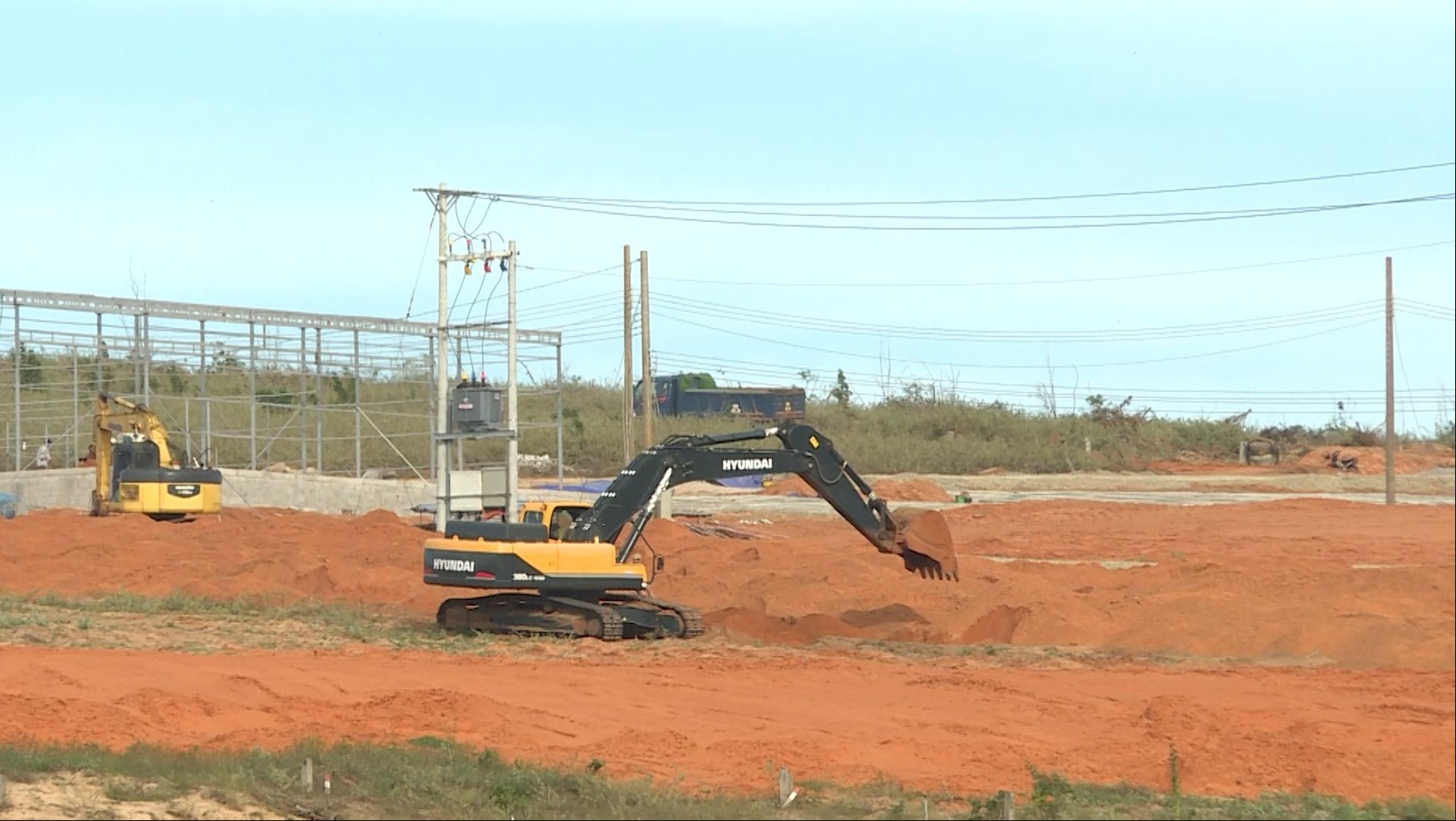
Once the water supply was secured, Binh went to great lengths to source rare yellow-skinned, white-fleshed dragon fruit varieties from Israel, Thailand, Taiwan, Ecuador, Colombia and Malaysia for trial cultivation. In the end, he chose the Israeli variety for its long, firm green bracts, crisp, sweet flesh, and higher commercial value.
But the harsh natural conditions soon dealt a severe blow to the determined wheelchair user. In the early stages, lacking experience with imported dragon fruit varieties, he struggled to keep the plants alive under the intense sun and wind. Their roots gradually rotted, many plants died, and others remained stunted. Even those that survived long enough to bear fruit failed to produce satisfactory results. Binh eventually had to remove the entire crop and start again from scratch. The money and effort he had poured into the project seemed to disappear into the sand.
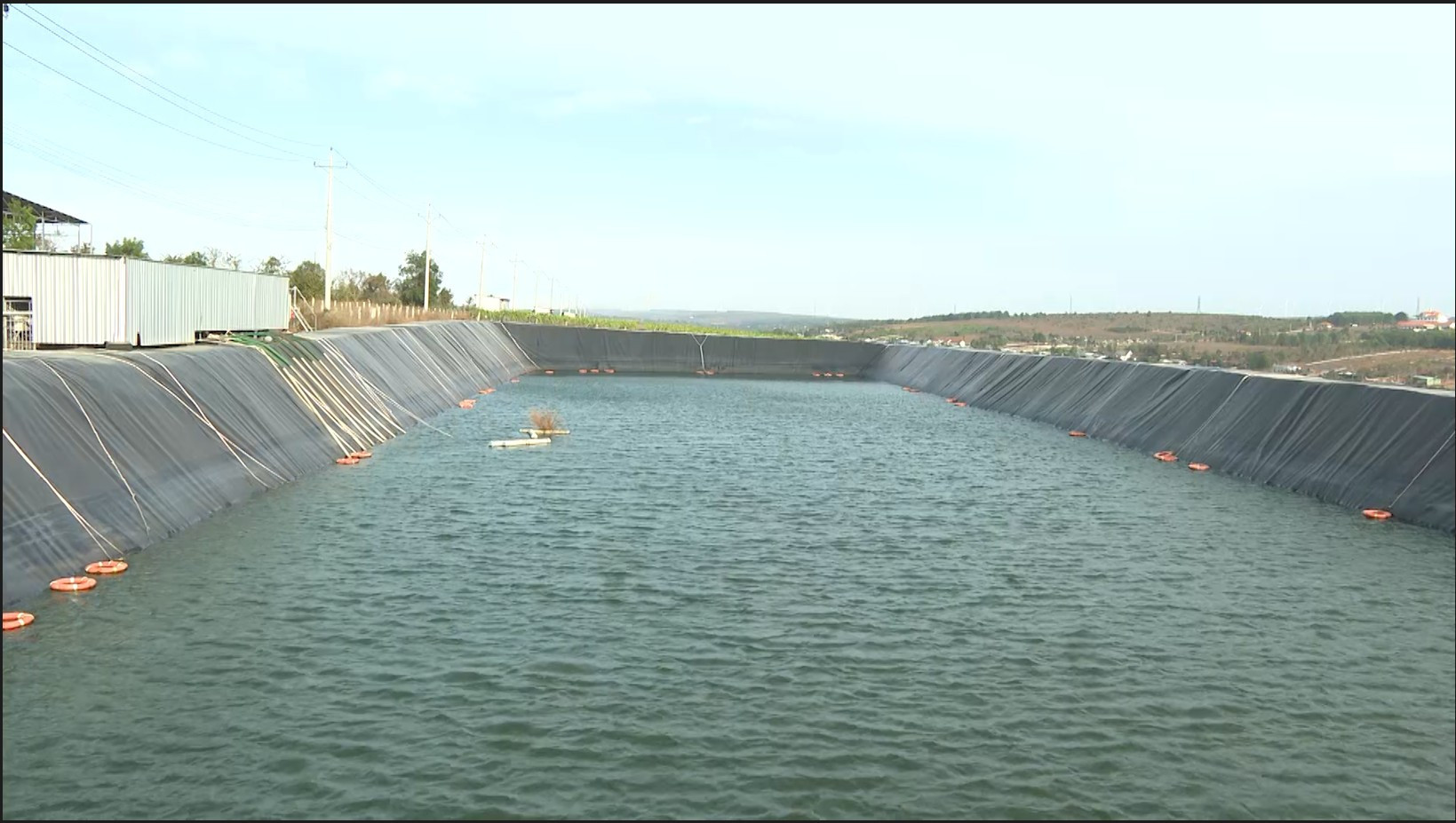
Failure did not deter him. Binh invested tens of billions of dong more in excavators and paved roads reaching every section of the farm.
He then adopted an unusual technical solution: excavators dug deep into the sandy soil, bringing nutrient-rich soil from below to the surface so the dragon fruit could take root and grow. The painstaking effort eventually paid off, as the first green shoots began to rise from the sun-scorched, windswept sands.
A “Marriage” Under the Night Lights
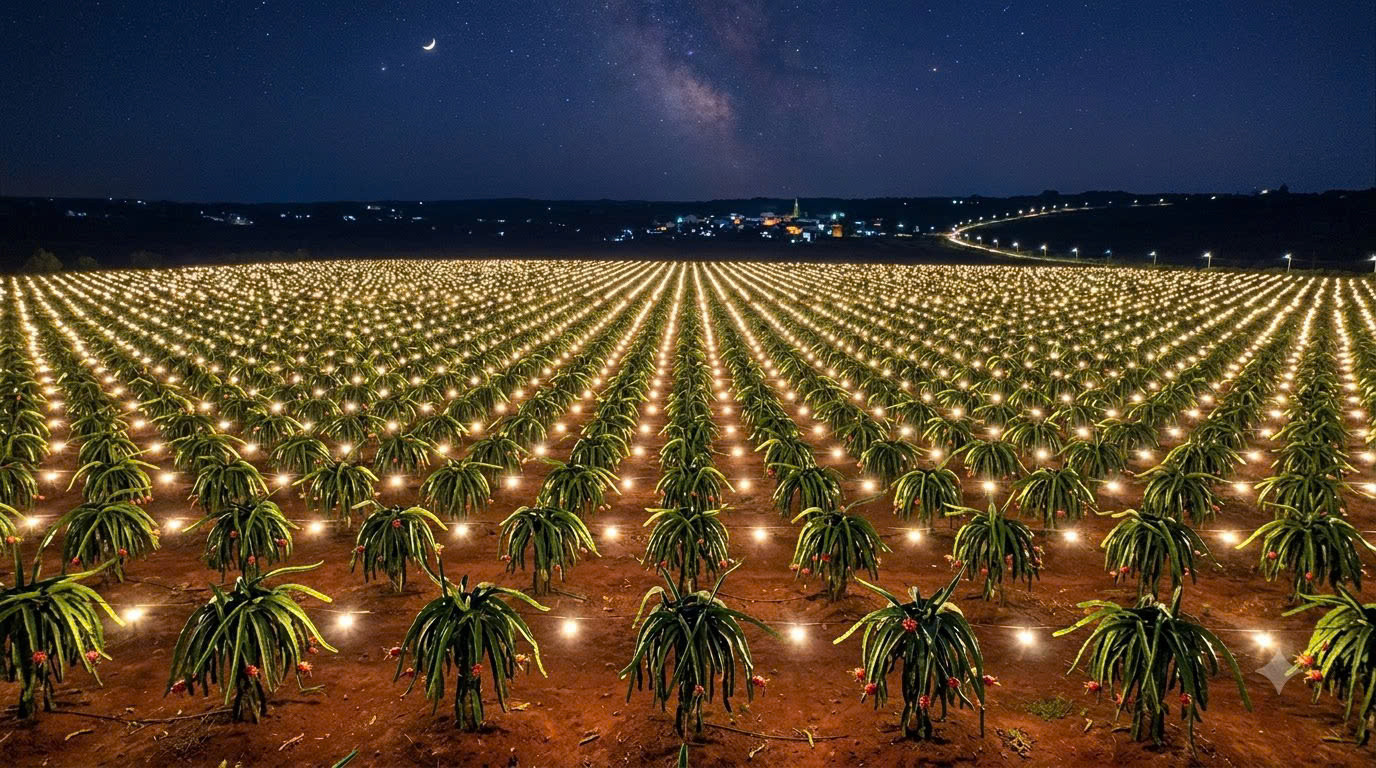
After overcoming countless difficulties, the once-barren sandy land has been transformed into 130 hectares of yellow-skinned dragon fruit and 70 hectares of pink- and red-fleshed varieties.
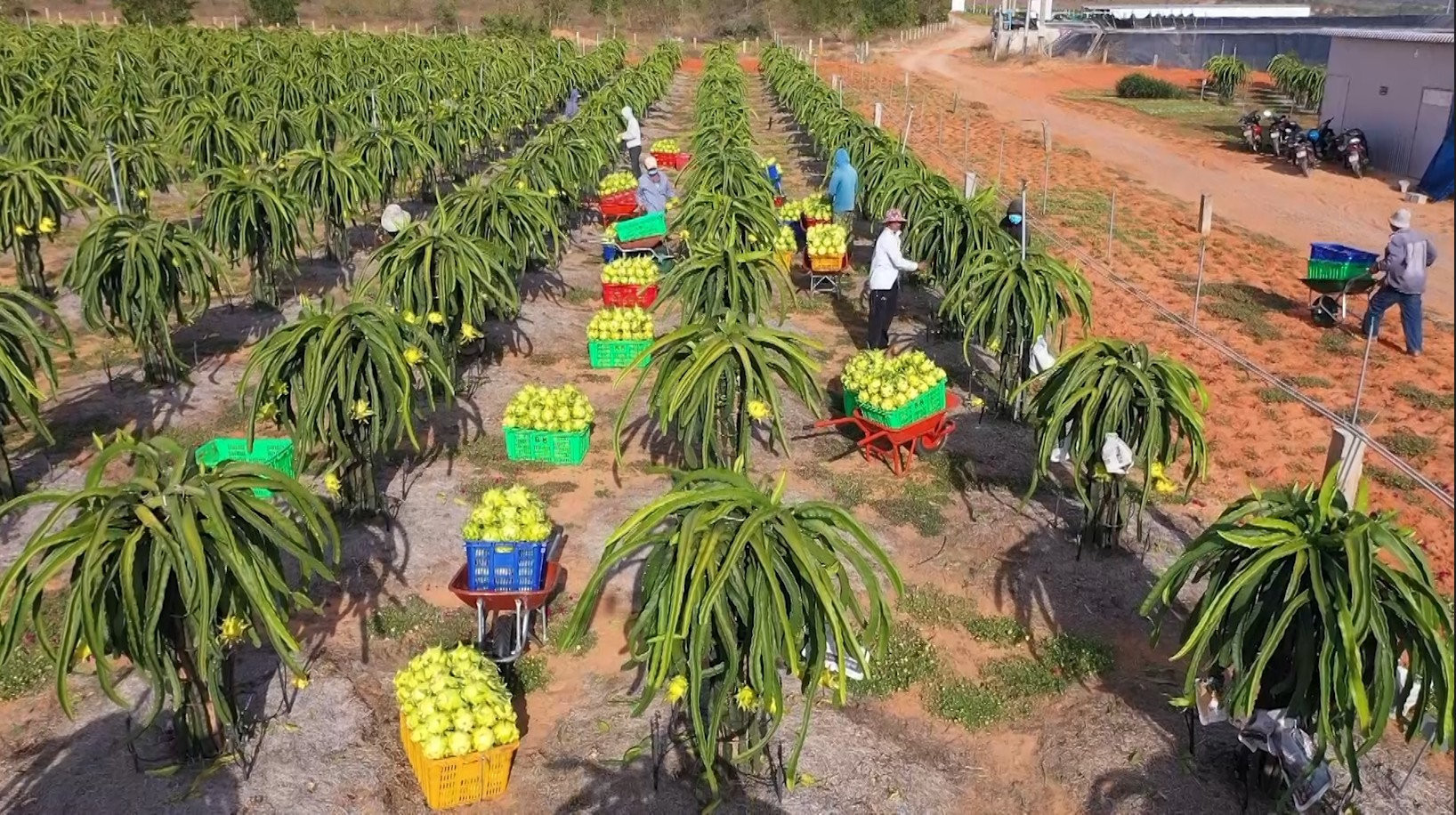
But how could growers induce this demanding crop to flower and achieve a high fruit-set rate while still producing the desired glossy golden appearance? Binh found the answer in a distinctive cross-pollination technique he developed through trial and error.
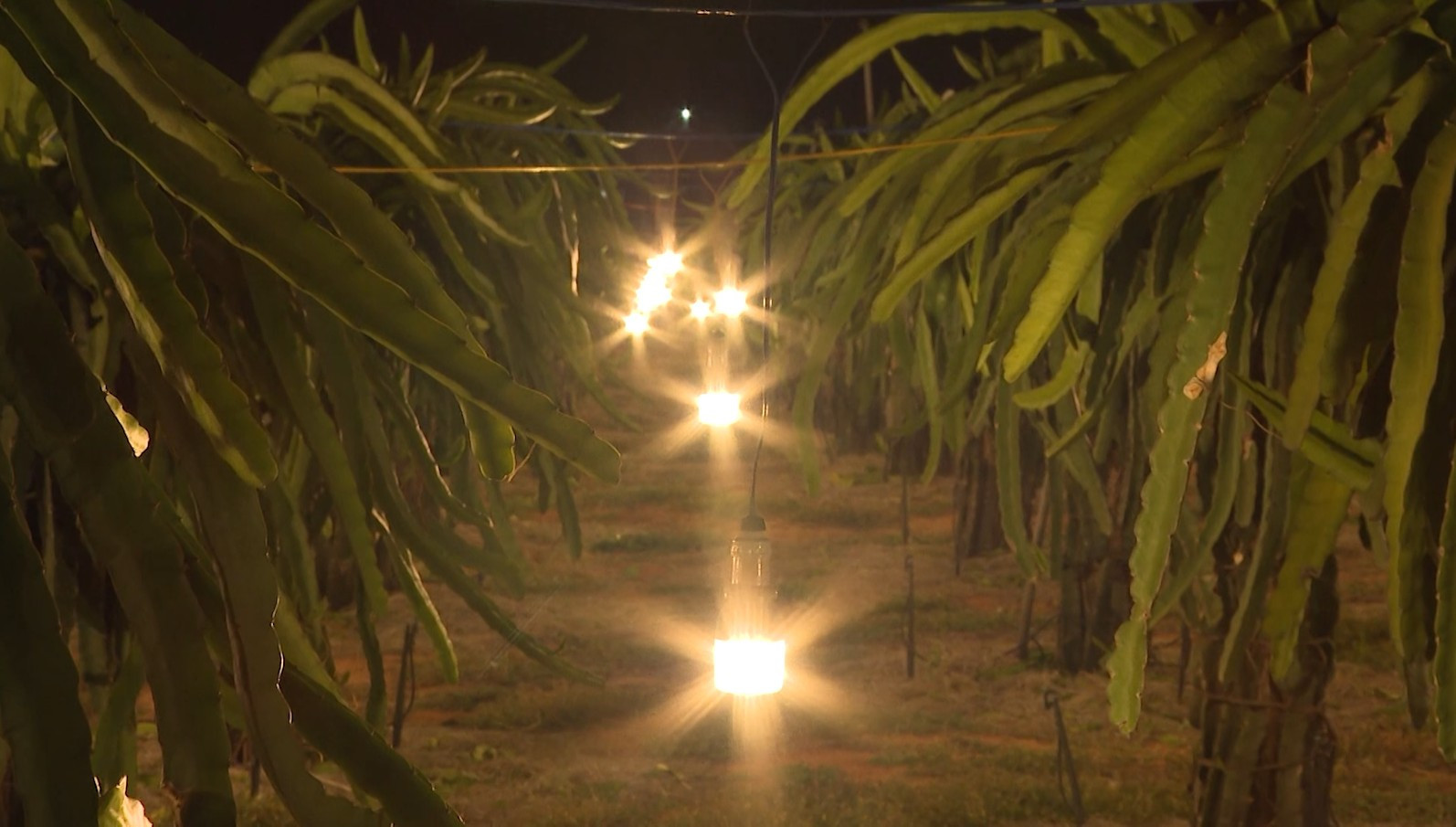
Ngo Van Binh explained: “The imported yellow-skinned dragon fruit did not set fruit well, and the quality was not as expected. We therefore use pollen from traditional white-fleshed dragon fruit to cross-pollinate the yellow-skinned variety. Pollen from one white-fleshed flower can be brushed onto several yellow-skinned flowers. The process has to be carried out entirely by hand throughout the night under artificial light, helping the fruit develop quickly, with firm green bracts and a bright golden skin.”
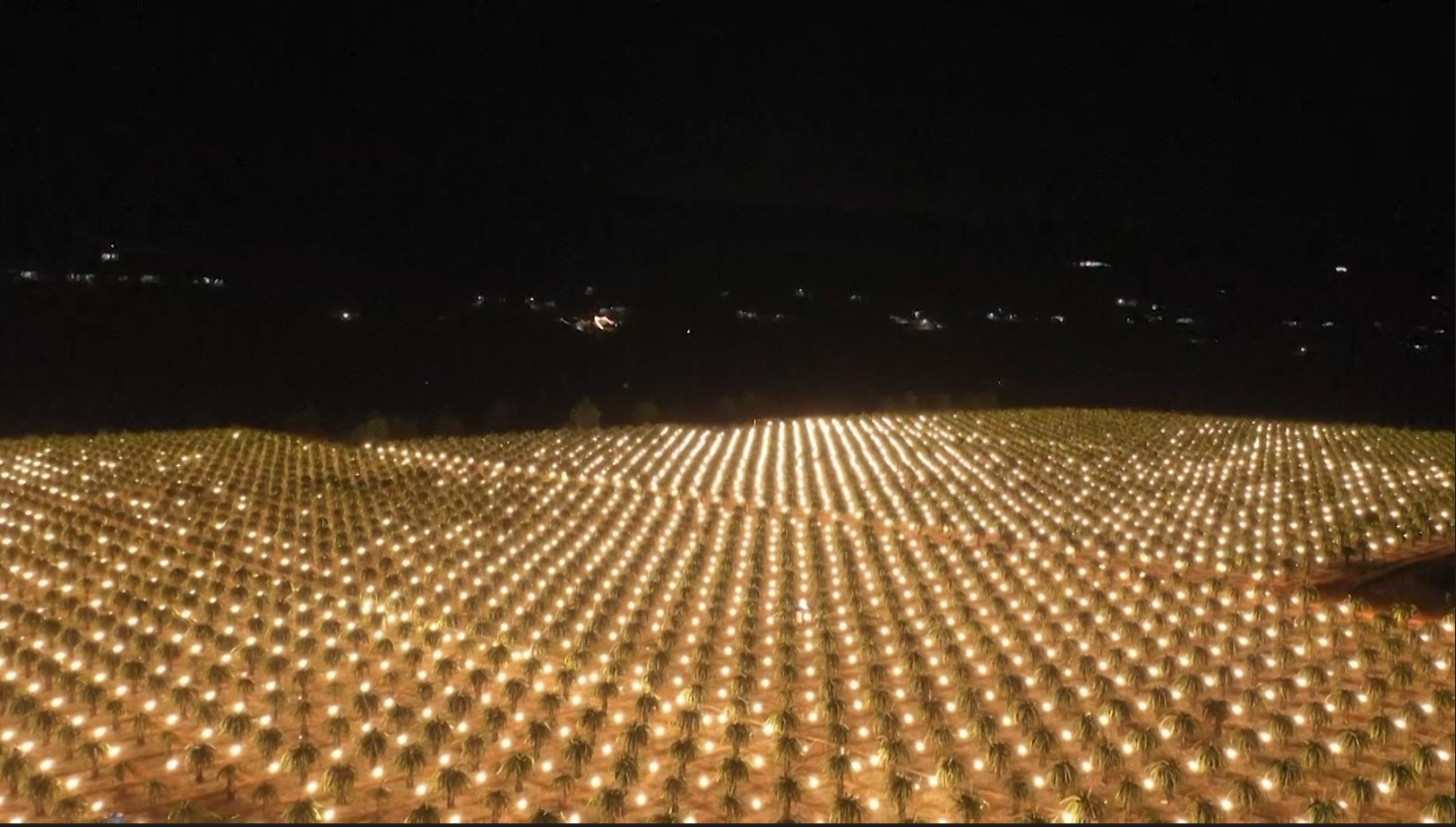
Ham Thuan in Lam Dong, part of the former Binh Thuan Province, is one of Vietnam’s best-known dragon fruit-growing areas and was long regarded as the country’s dragon fruit capital. Yet few growers had ventured into large-scale cultivation of yellow-skinned dragon fruit or adopted such a meticulous production technique.
After nights of artificial lighting to synchronise flowering between the yellow-skinned and white-fleshed varieties, the hand-pollination process begins after 10 p.m., when the flowers start to open in the night air.
Turning “Golden Dragon” into a Success Story
Binh’s bold decision and scientific approach have paid off. His yellow-skinned dragon fruit is exported directly to Thailand and China without passing through intermediary traders.
During major holidays and Tet, the fruit can fetch prices three to five times higher than those of conventional white-fleshed dragon fruit, creating an exceptional agricultural business model in the heart of the former dragon fruit capital.
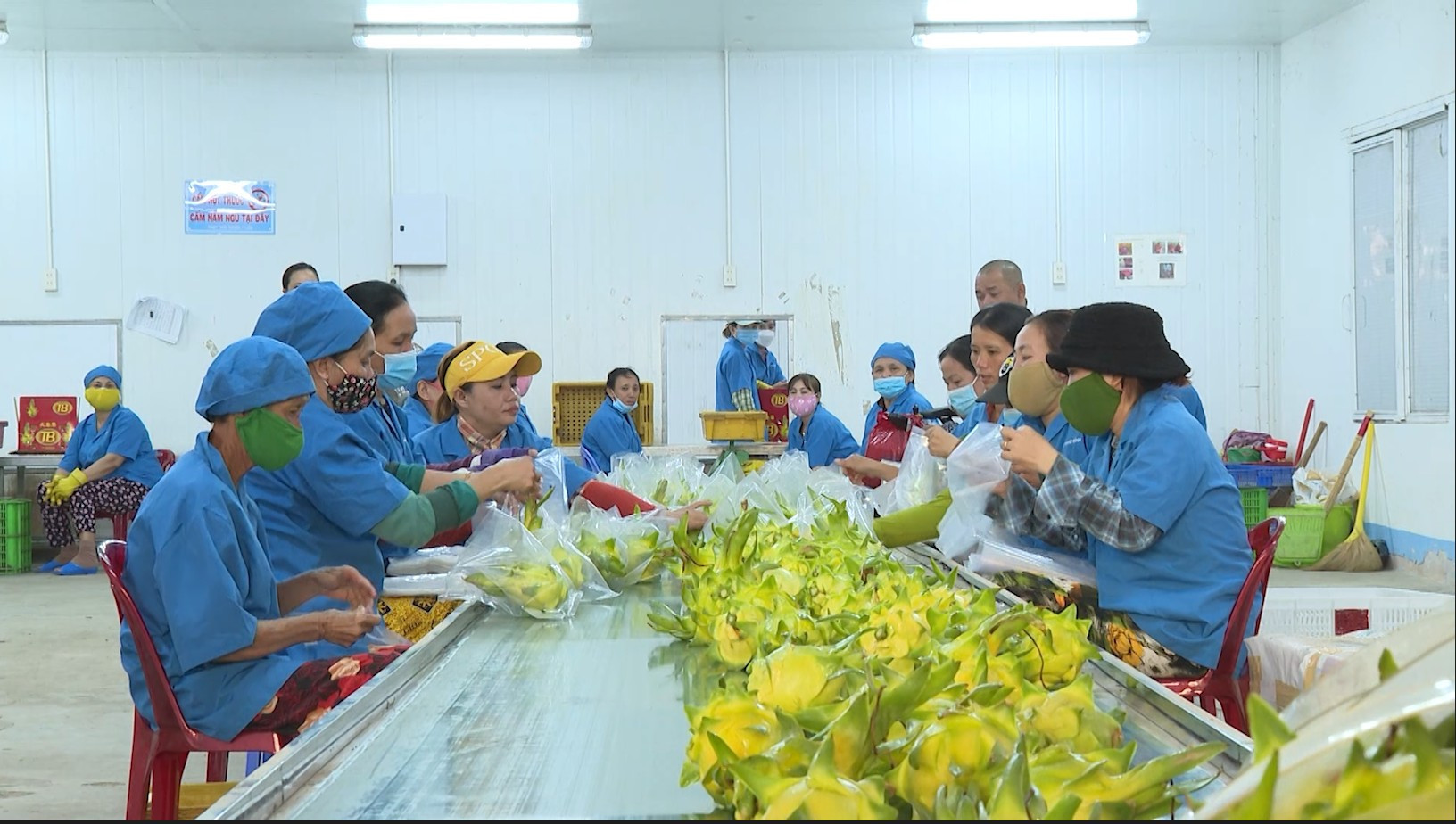
Yet what makes Binh most proud is not the tens of billions of dong in annual revenue, but the support his farm provides to people facing hardship. His wheelchair supports a body limited by disability, while his compassion has helped hundreds of workers secure jobs and build more stable lives.
Binh treats his workers like members of his own family. On the once-barren sands, love has also taken root. Two migrant workers at the farm met, fell in love and eventually married, with the warm support and blessing of their employer.
.jpg)
Dong Van Binh, one of Binh’s workers, said happily: “We were overjoyed that Binh came to our wedding in his wheelchair to celebrate with us and give us his blessing.”
.jpg)
Nguyen Ngoc Dinh and Bui Van Hung, both farm workers, shared a similar view of their employer: “Chin Binh treats us with genuine care and kindness. We came here from far away to build a new life, and thanks to him, we have stable jobs and food and accommodation. He even helps take care of things when workers get married. Seeing how hard he works every day from his wheelchair inspires us to do our best so we do not let him down.”
Aspirations Taking Flight
Faced with cruel turns of fate, some may choose to give up. For Ngo Van Binh, however, profound physical suffering became the driving force behind an extraordinary ambition: to bring barren land to life and turn its harsh sun and winds into the lifeblood nourishing “Golden Dragon” fruit for global markets.
.jpg)
His legs stopped carrying him forward at the age of 36, but his ambitions, dreams and aspirations never ceased to rise. From the barren sandy hills of Ham Thuan, the “Golden Dragon” success story is now reaching far beyond the region, standing as a testament to extraordinary resilience and the strength of faith and family bonds in overcoming what once seemed impossible.