


Y Sim Eban – A Distinguished Artisan of the Ede Community
For years, Y Sim Eban has been known among the Ede people of Nui village and other villages in Cu Jut commune (Lam Dong), as a dedicated artisan who has devoted himself to preserving and passing on Ede cultural heritage.
A Lifelong Devotion to Preserving Ede Culture
From an early age, Y Sim Eban was immersed in the sound of gongs and drums echoing through village festivals and ceremonies. Whenever a wedding, a new rice festival, or another community event took place, he would watch in fascination as elders and artisans performed. Those rustic sounds instilled in him a deep and lasting love for traditional Ede music.
Through years of diligent learning from village elders, Y Sim Eban gradually became a skilled gong player. He not only mastered many ancient gong pieces, but also learned how to tune the instruments and guide others in maintaining rhythm and coordinating ensembles during traditional festivals. To this day, he continues to preserve and remember many ancient Ede gong melodies, each tied to a specific ritual and carrying its own significance in community life.
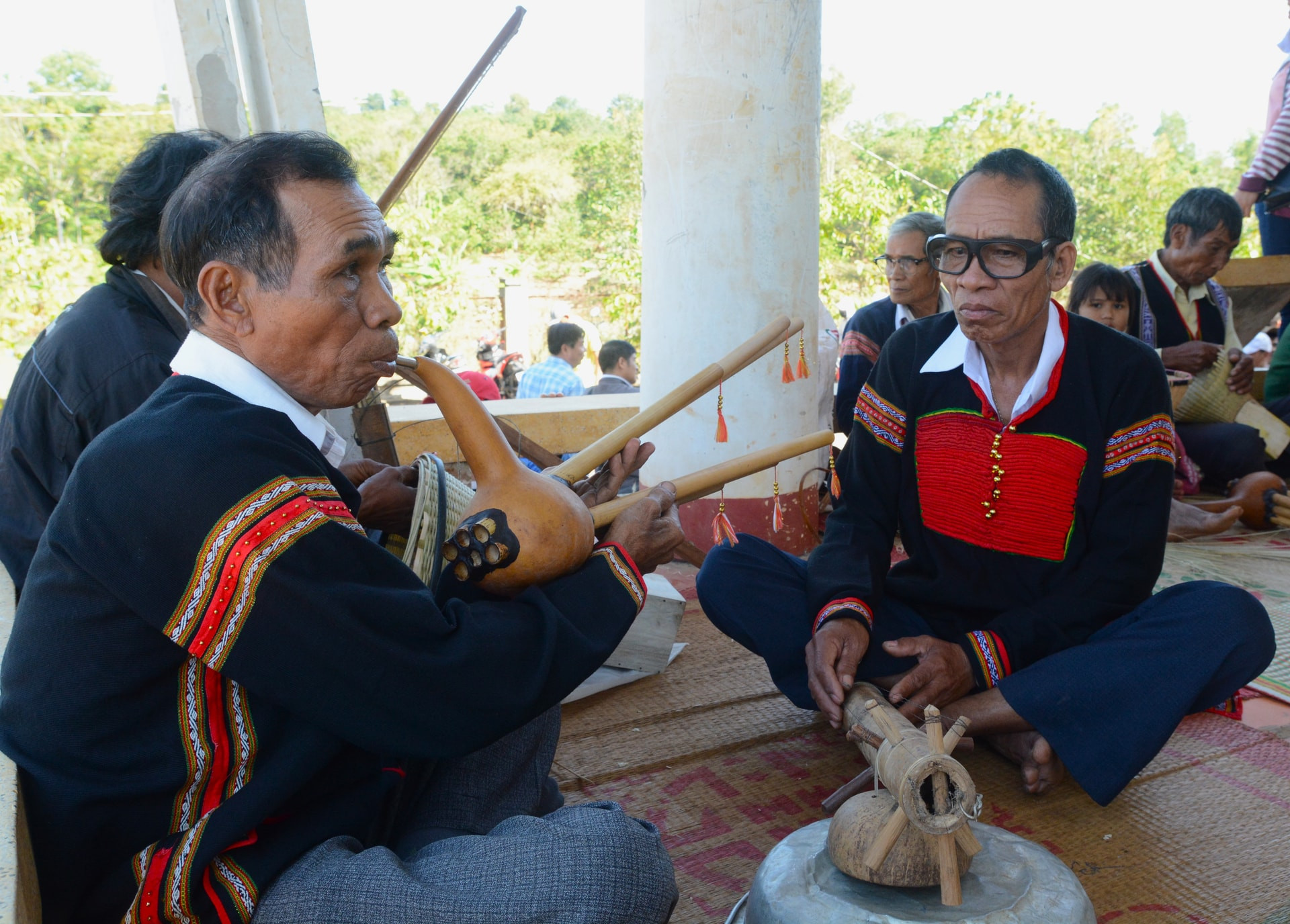
Beyond his skill in gong performance, artisan Y Sim Eban is also deeply knowledgeable about many Ede customs and traditions. He is often invited to take part in village rituals, advising on ceremonial practices and helping local residents organize traditional rites in accordance with their ancestral customs.
Thanks to his depth cultural knowledge, he is widely respected in the village and seen as a “living repository” of Ede heritage. In 2015, he was officially recognized as a Meritorious Artisan in folk performing arts for his contributions to gong performance and teaching.
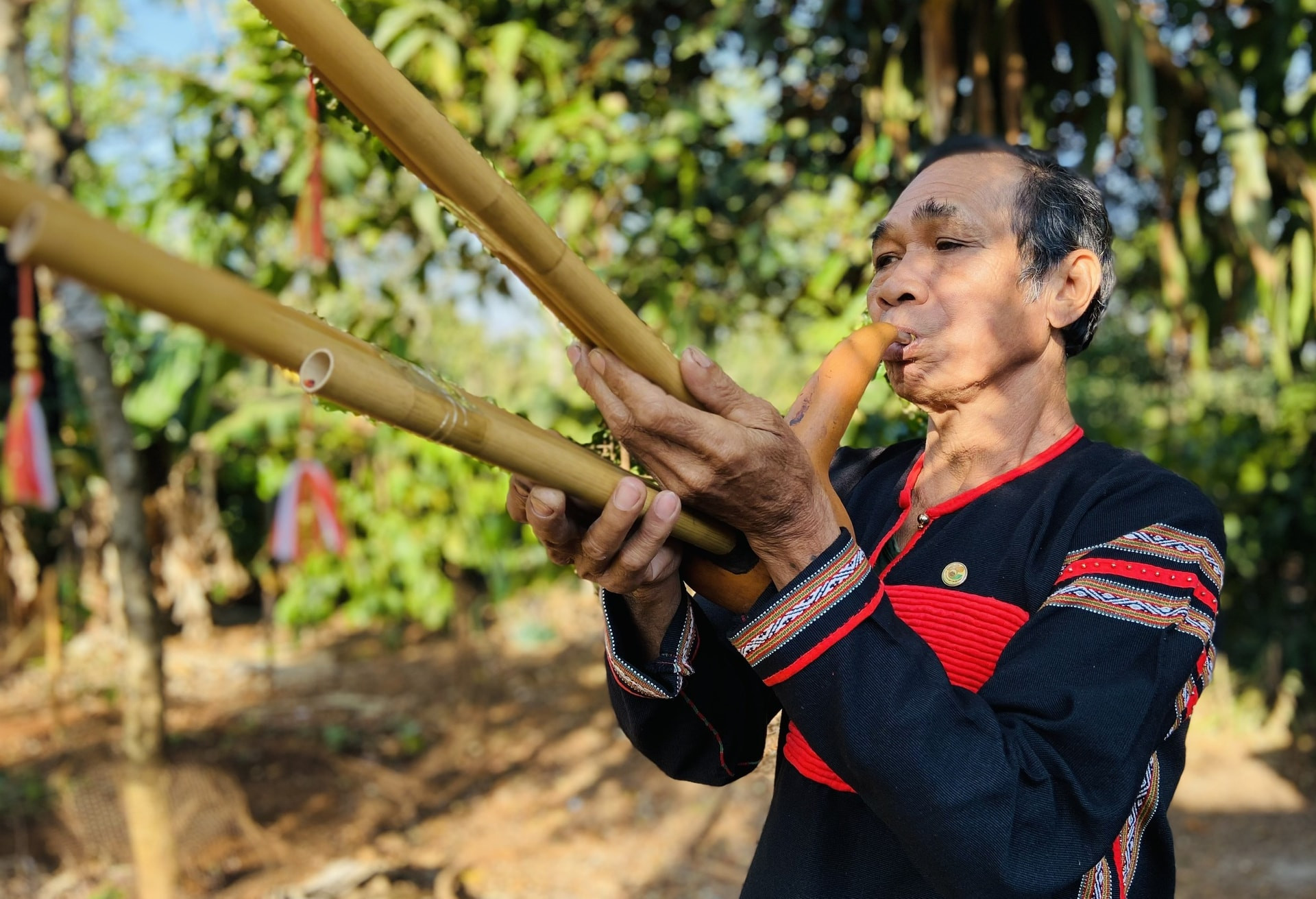
What many people admire most about Y Sim Eban is his ability not only to play but also to craft a wide range of traditional musical instruments. He can skillfully play the gung lute, the dinh nam flute, the horn, and especially the mbuot — an instrument deeply woven into the cultural life of the Ede people.
He also crafts many traditional instruments by hand. Using materials such as bamboo, bamboo reeds, and forest wood, he turns them into instruments that produce rustic, intimate sounds. Many young people in the village have come to learn the craft from him, not only to use the instruments in cultural activities but also to gain a deeper understanding of their traditional cultural heritage.
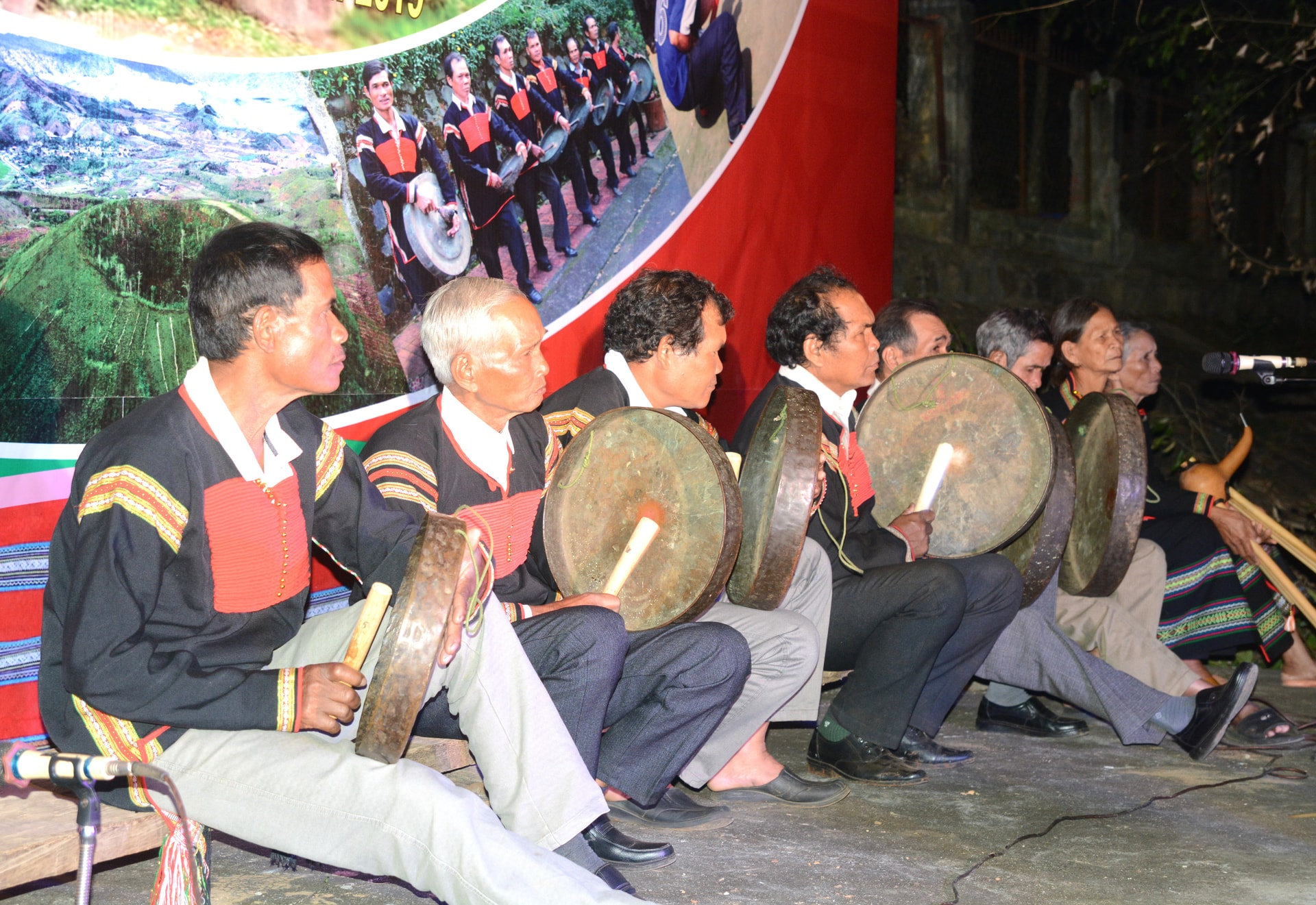
Artisan Y Sim Eban has devoted much of his time to teaching younger generations the art of gong performance and traditional instruments. Many of the lessons take place at the village cultural house or stilt homes. Through these modest sessions, many local youths have learned not only how to play the gongs, but also to appreciate the deeper meaning each melody carries in community life.
Thanks to his unwavering dedication, cultural life in Nui Village and Ede communities across Cu Jut Commune has grown increasingly vibrant. During festivals, the sound of gongs draws large crowds and strengthens community bonds. As a result, younger generations are developing a deeper sense of pride in, and commitment to preserving, their cultural identity.
Breathing New Life into Village Traditions
To date, Nui village has successfully restored and preserved nine sets of gongs and established two performing troupes—one consisting of veteran artisans and the other of young practitioners. Nui has since emerged as a model traditional cultural village for the Ede people in Western Lam Dong.
Commenting on Y Sim Eban’s contributions, Y Jut Bya, a respected village elder, shared: "Y Sim Eban is deeply passionate about Ede culture. He is not only a master of the gongs and the m'buot flute but also a skilled instrument maker. Thanks to him, our youth now understand and cherish the traditional values of our people."
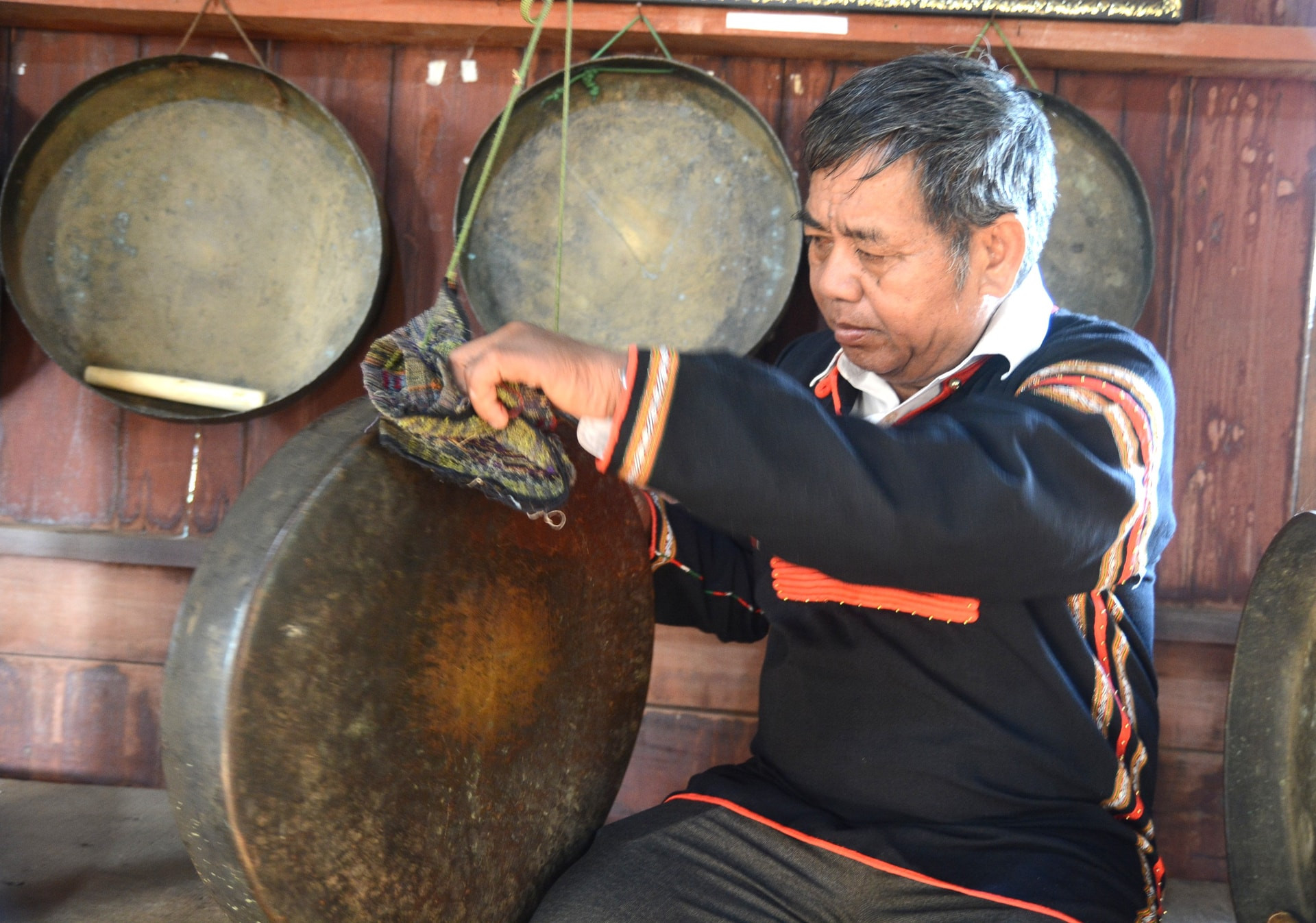
In the coming time, Y Sim hopes that provincial and local cultural authorities will provide further material and spiritual support by organizing more workshops on gong performance, weaving, and instrument crafting to empower younger generations to uphold Ede traditions. Such efforts, he noted, are essential to preserving and enriching the diverse cultural heritage of the province’s ethnic communities.
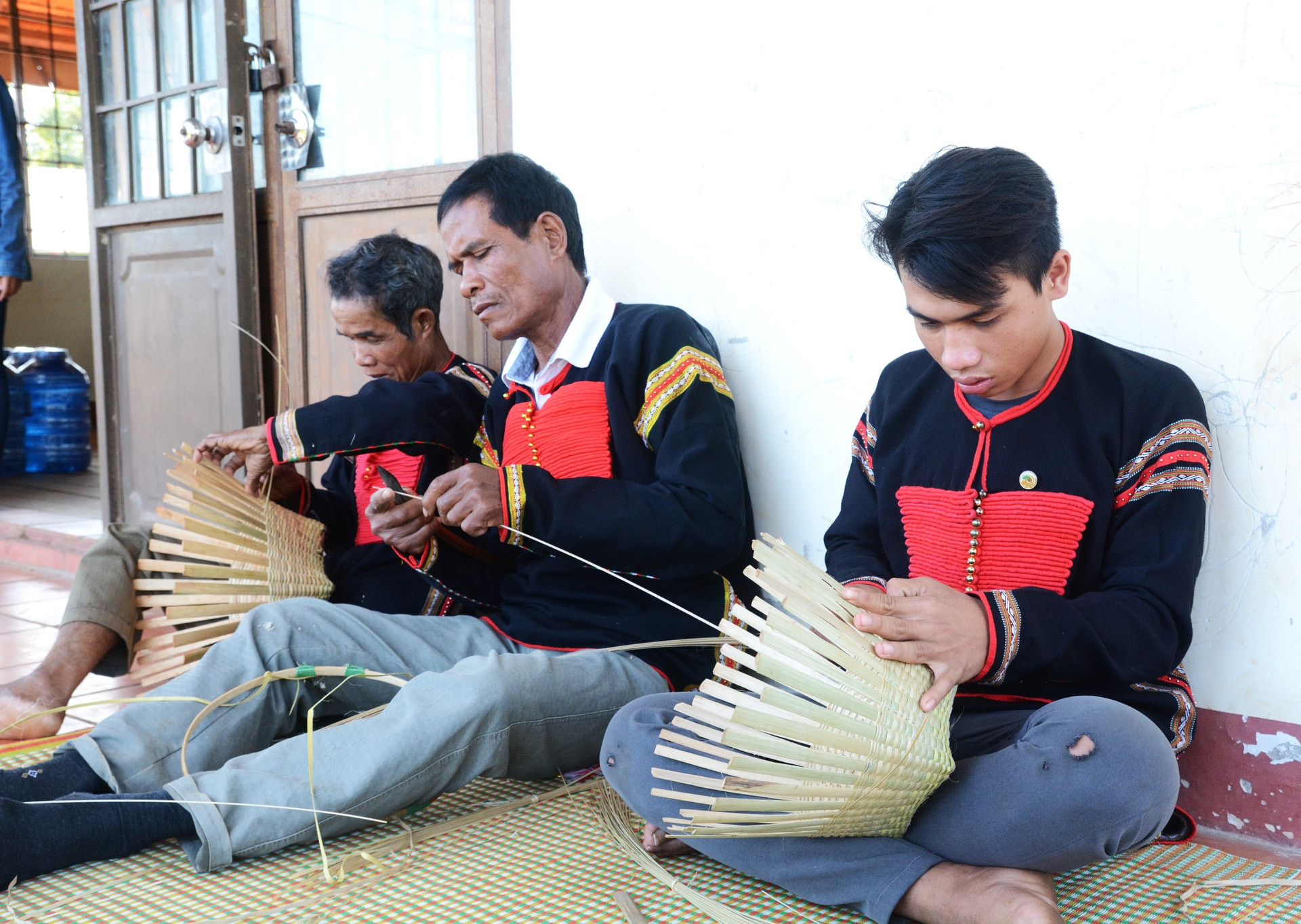
Amid the pressures of modern life, as many traditional values risk fading away, artisans like Y Sim Eban quietly preserve and pass on the soul of their heritage. From the sound of gongs and the m’buot to the traditional instruments shaped by his skilled hands, his work helps keep Ede cultural identity alive across the Central Highlands.