


Green Pastures, New Livelihoods Along the Luy River
In Luong Son Commune, Lam Dong Province, local residents are shifting from aging, low-yield dragon fruit orchards to grass cultivation and cattle farming, focusing on breeding and fattening. By making use of riverside land, water resources and agricultural by-products, this model is opening up a more suitable production approach, generating additional income and helping many families achieve greater economic stability.
Turning Underperforming Farmland into Cattle Feed Production
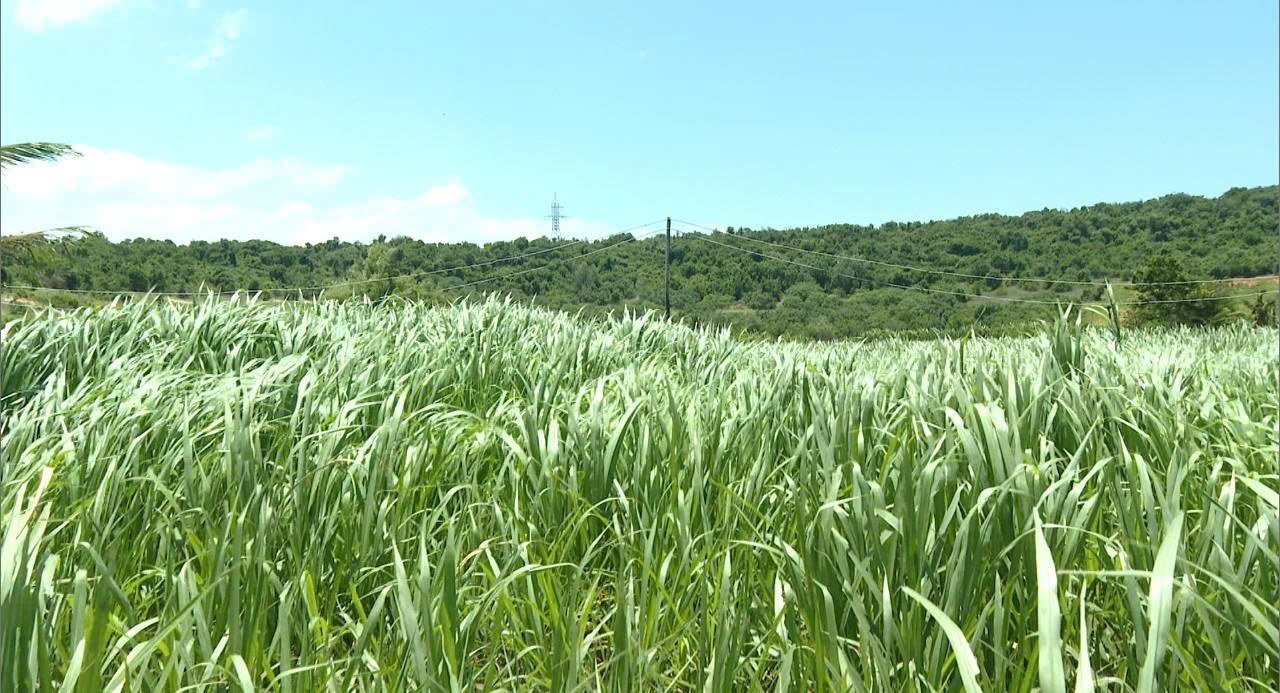
In Luong Dong Hamlet, Luong Son Commune, lush plots of elephant grass, milk grass and VA06 grass can easily be seen stretching along the Luy River. Scattered among these green pastures are small-scale cattle farms, where residents tend to their herds every day. Notably, many of these areas were previously used for dragon fruit cultivation. As the orchards aged and became less economically productive, local farmers boldly shifted to grass cultivation and cattle raising in search of production models better suited to their household conditions.
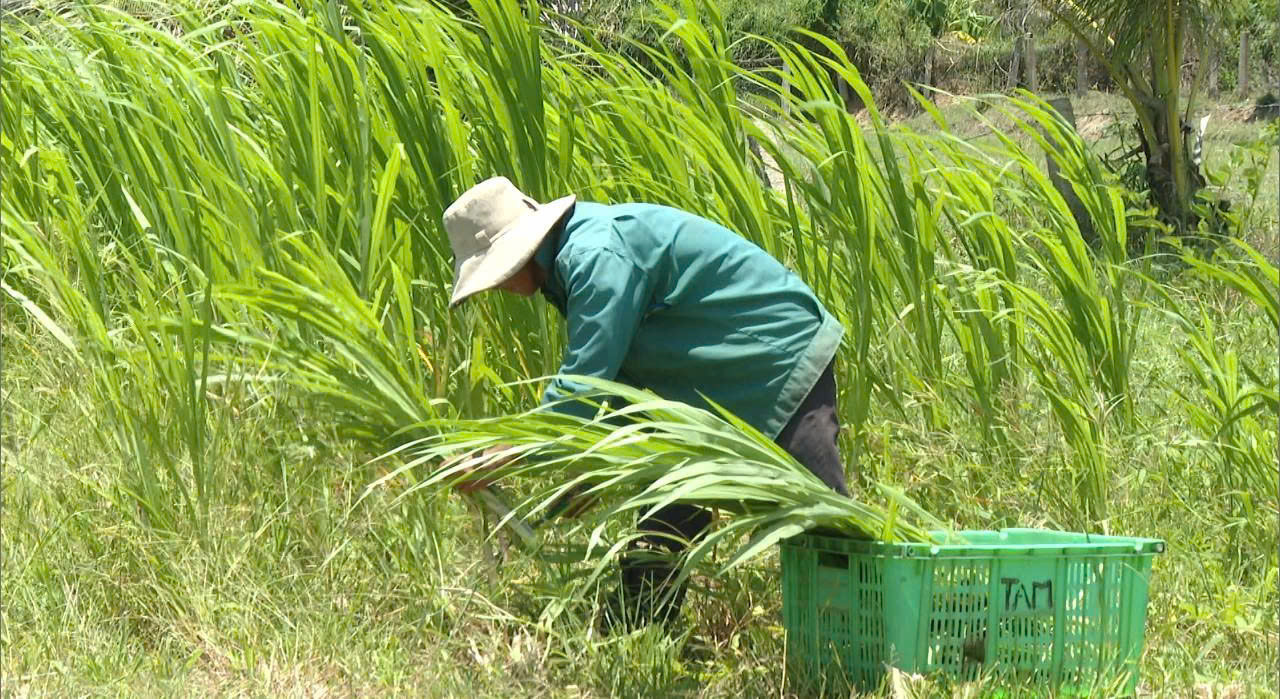
On more than 6,000 square meters of land previously used for aging dragon fruit orchards, Nguyen Huu Hoa, a resident of Luong Dong Hamlet, has switched to growing elephant grass, milk grass and VA06 grass to support his cattle-breeding operation. Benefiting from available farmland and convenient irrigation water from the riverside area, he gradually developed a family-run livestock model. After approximately five years, his herd has stabilized at 12 head of cattle. Each year, his family sells five to six calves, generating profits of more than VND 50 million.
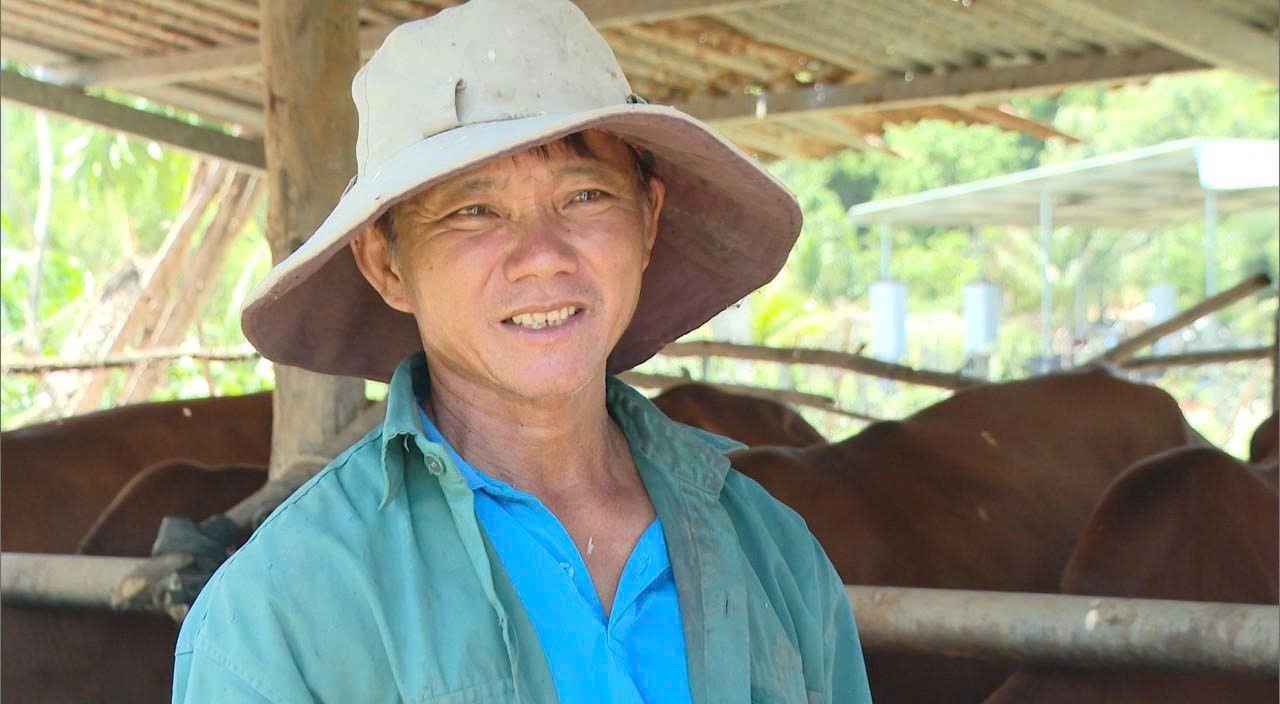
According to Hoa, the greatest advantage of this model is the ability to secure a reliable, self-sufficient feed supply for the herd. Growing grass on his own land makes cultivation and harvesting more convenient while reducing dependence on externally purchased feed. In addition, collected and treated cattle manure is reused as fertilizer for the grass fields, helping improve soil quality and reduce fertilizer costs.
This approach creates a closed-loop production cycle at the household level: grass-growing land provides feed for cattle, while treated livestock waste is returned to support crop production.
By making effective use of available local resources, my family has been able to put land that no longer generated the expected income to better use while maintaining a steady source of earnings from cattle farming.
Nguyen Huu Hoa, Luong Dong Hamlet, Luong Son Commune
Also in Luong Dong Hamlet, the experience of Nguyen Huu Hao illustrates another approach for households with limited initial capital. Approximately five years ago, using a VND 20 million loan, he began investing in cattle breeding. Starting with just a few breeding cows, he gradually built up his experience and financial resources while expanding his herd. Today, his family raises more than 10 head of cattle on five sao of grass-growing land.
Rather than making a large initial investment, Hao adopted a labor-intensive approach, relying on grass grown in his garden and rice straw left after each harvest to feed his cattle. He organizes the work to suit his family's available time and labor. Beyond generating income from calf sales, the herd also serves as an accumulated household asset, providing additional resources for economic development.
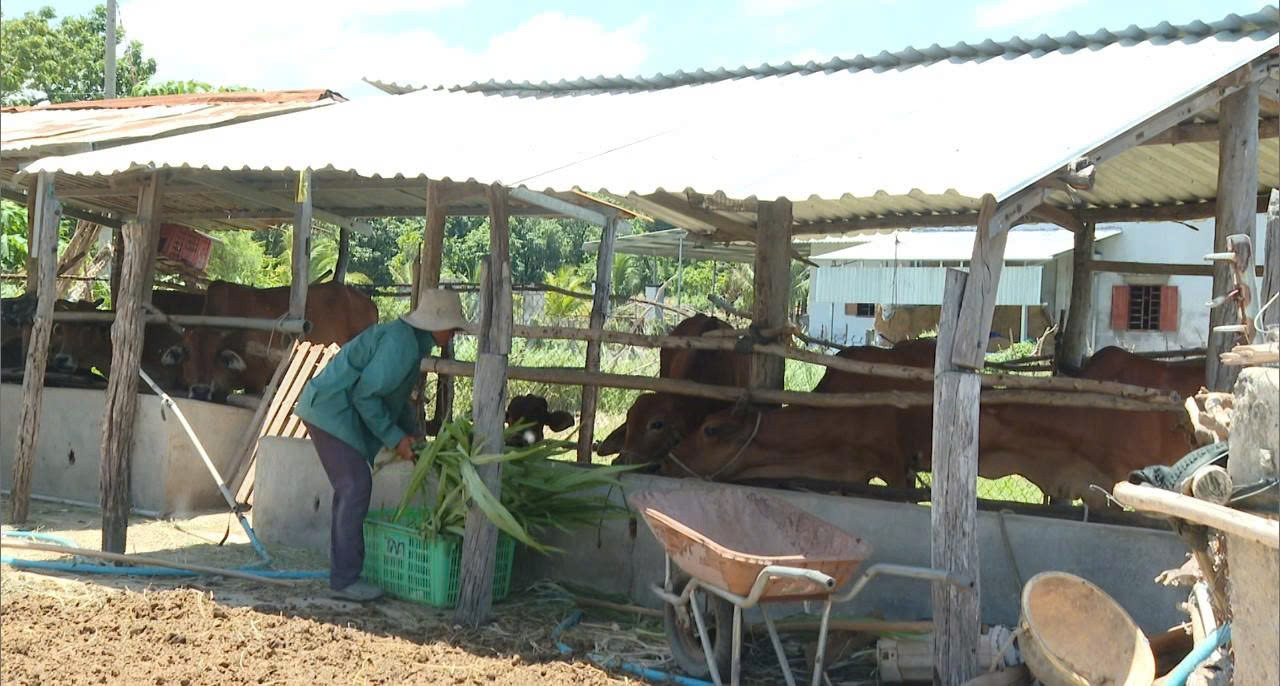
Experiences in Luong Son show that breeding cattle is an option favored by many households because it does not necessarily require large-scale investment from the outset. Farmers can begin with a small number of breeding cows, use available land to grow grass and supplement feed with agricultural by-products. As the herd expands and calves are sold, part of the proceeds can be reinvested to increase the number of cattle.
According to local farmers, calves can generally be sold after approximately six to seven months, while the reproductive cycle of cattle is around 13 to 14 months per calving. One local livestock-raising household said that with 12 breeding cows, a family could sell approximately five calves annually, at an average price of VND 10 million per calf. Although this income does not come in at a fixed time, it can be maintained over the years, providing families with an additional source of savings.
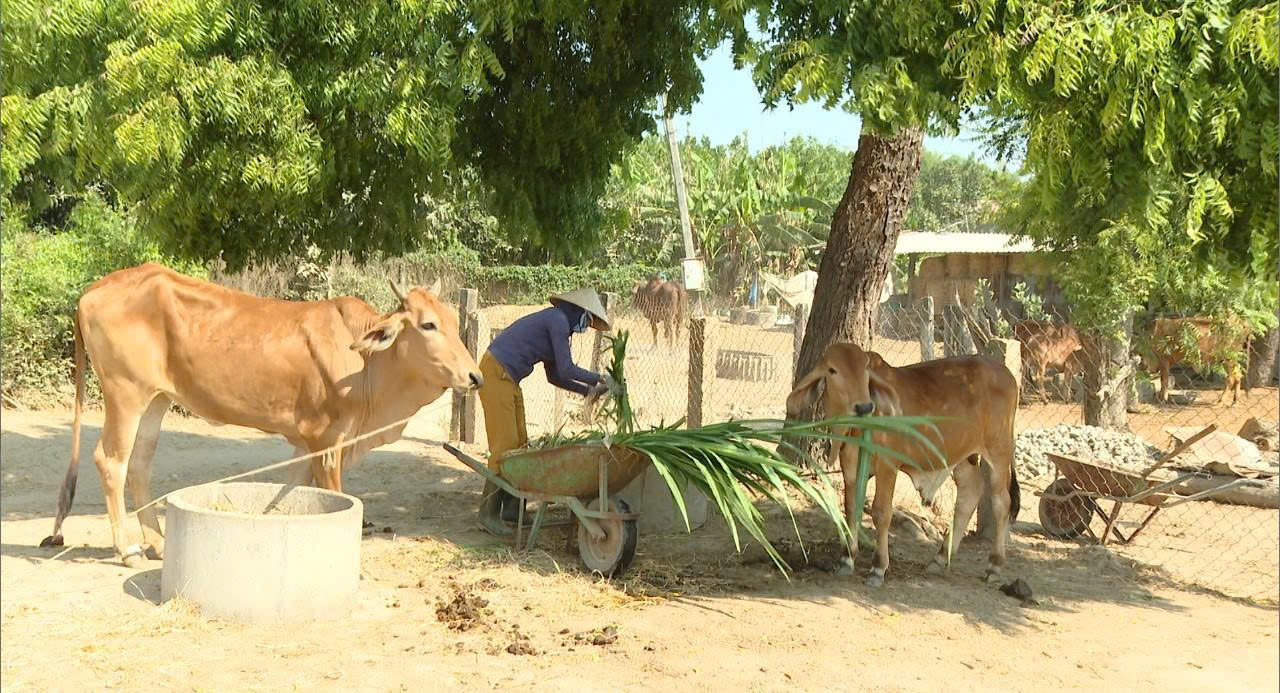
In Bac Son Hamlet, Luong Son Commune, Pham Thi Son said many local households had taken the initiative to borrow capital to purchase breeding cattle, making use of grass grown in their gardens and rice straw from agricultural production to develop livestock farming. According to her, cattle raising may not make farmers wealthy overnight. However, with careful herd-size planning, a reliable feed supply and proper animal care, the model can generate income, improve living conditions and gradually help households escape poverty.
A common feature of these households' approach is that they do not pursue large-scale expansion but instead choose a manageable production model suited to their land, capital and labor resources. Aging orchards are being converted into grass fields, while cattle herds are gradually established and expanded through modest initial investments. The model's effectiveness therefore extends beyond revenue from selling calves and cattle to include the productive use of land, agricultural by-products and family labor.
Leveraging Riverside Advantages to Expand Cattle Farming
From a number of pioneering households, cattle farming in Luong Son Commune has now developed on a considerable scale. The commune's total cattle herd currently stands at approximately 8,600 head. This includes one farm with around 200 head and approximately 150 household-scale farms combining grass cultivation with cattle raising, each keeping between 10 and 200 head. Residents are engaged in both breeding and cattle fattening, gradually establishing a production model that makes use of local land resources, water supplies and agricultural conditions.
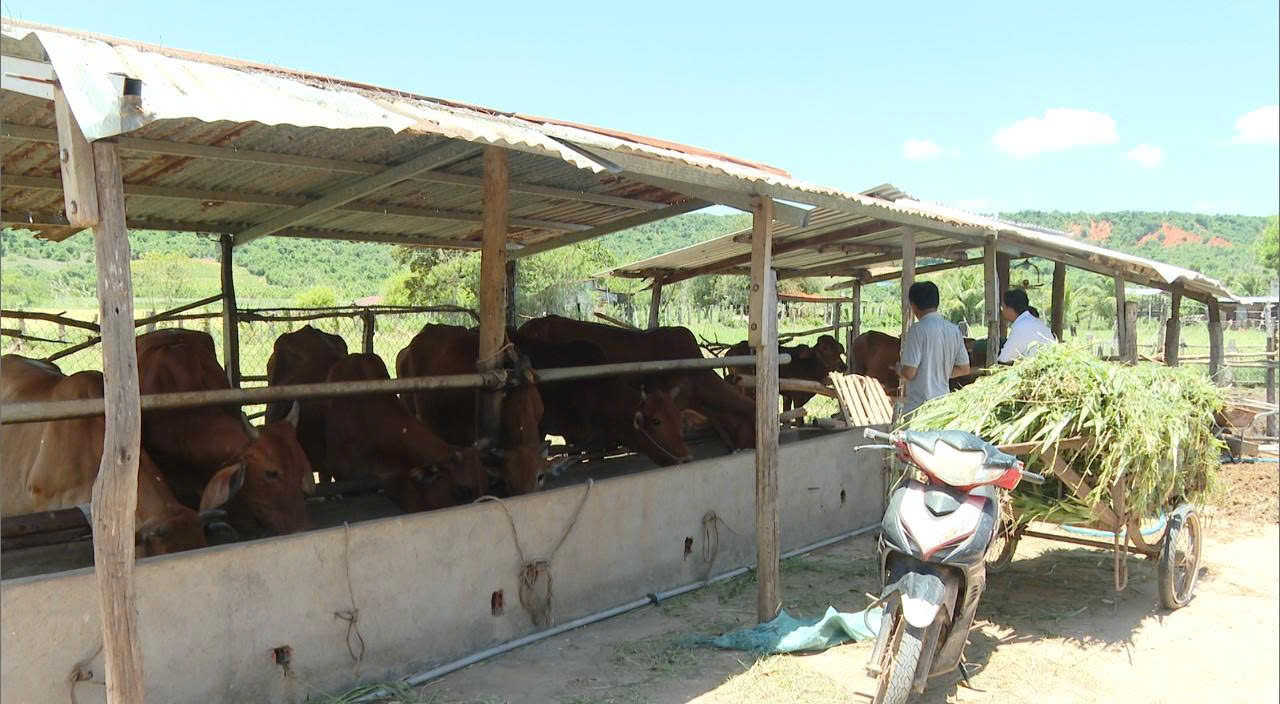
One of the key factors supporting this development is the availability of farmland along the Luy River. Water resources for irrigation help grass varieties grow well, providing a regular supply of feed for cattle. Rather than continuing to cultivate crops that have become less economically productive, many households have switched to growing grass to secure their own feed supplies. Combining grass cultivation with cattle farming also enables residents to make better use of agricultural land, reducing the amount of land left unused or underutilized.
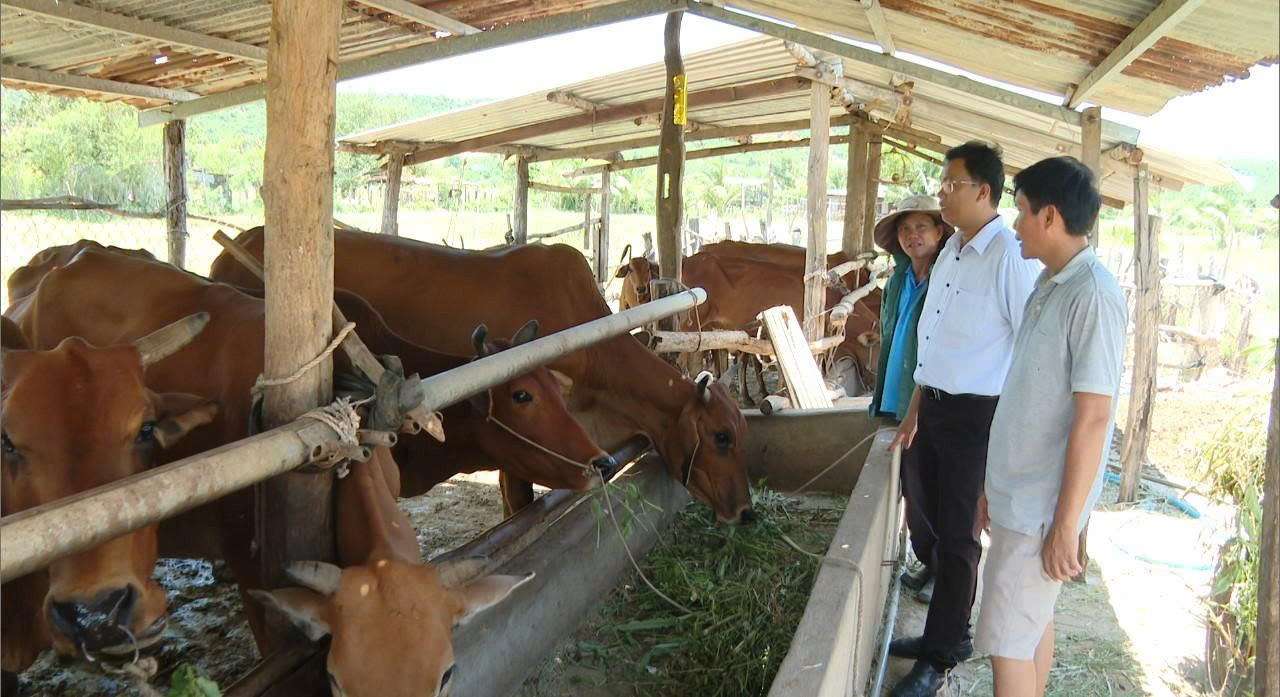
In addition to taking advantage of natural resources, local farmers are making greater use of by-products from agricultural production. Rice straw left after each harvest is used as cattle feed, while collected and treated livestock manure is returned to the grass fields. This approach helps reduce input costs, improve land-use efficiency and strengthen the connection between crop cultivation and livestock farming at the household level.
Le Dang Phap, Vice Chairman of the Luong Son Commune People's Committee, said residents had proactively made use of farmland along the Luy River to grow grass and establish on-site feed supplies for their cattle herds. The model not only makes more effective use of agricultural land but also takes advantage of farmers' available time between cropping seasons, creating additional employment and income opportunities.
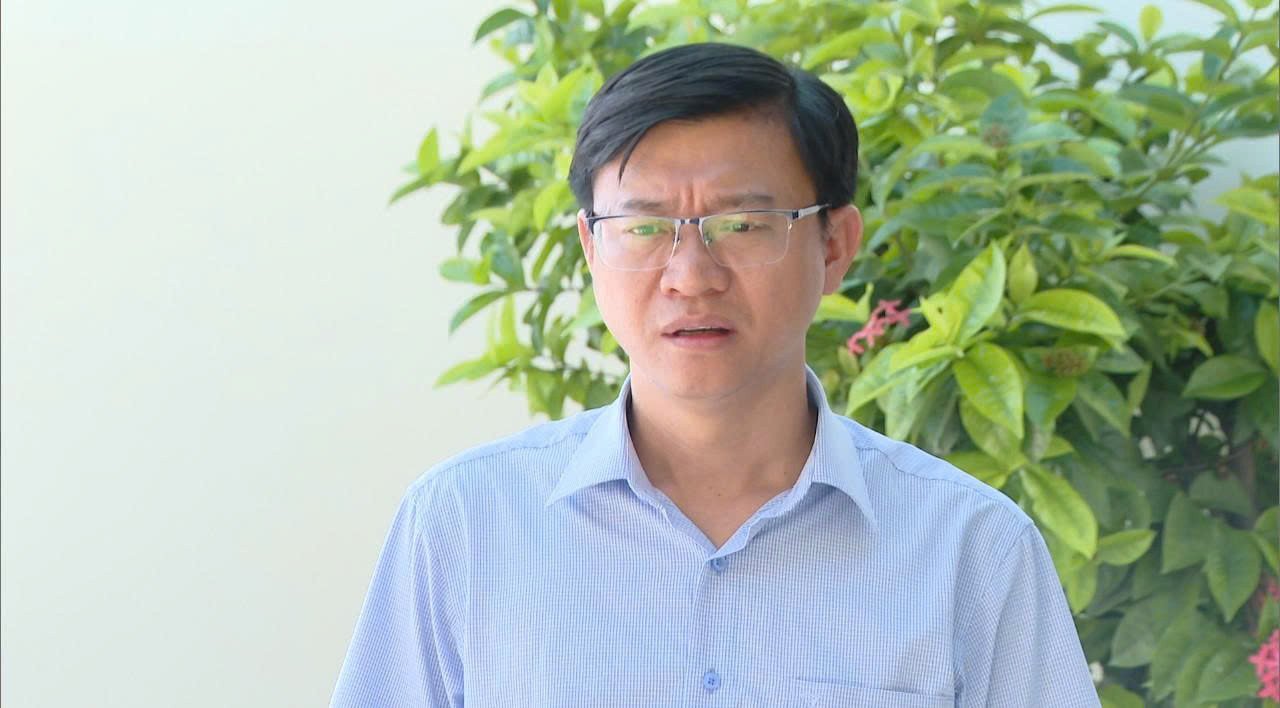
In the coming period, the locality plans to call on businesses and investors to participate in developing large-scale livestock farms, gradually reducing small-scale, scattered cattle raising while improving the capacity to meet demand in local and wider markets.
Le Dang Phap, Vice Chairman of the Luong Son Commune People's Committee
This orientation offers opportunities for the commune's livestock sector to develop on a larger and more professional scale. However, alongside herd expansion, greater attention must also be paid to production organization, disease control, breeding stock quality and livestock waste treatment. These are essential factors in minimizing risks, reducing environmental impacts and maintaining the long-term effectiveness of cattle farming.
In particular, the use of riverside land for grass cultivation must be aligned with land-use planning, ensuring compliance with river protection corridors and safeguarding water resources. The expansion of livestock farming must also go hand in hand with proper barn sanitation, waste collection and treatment in accordance with regulations. As cattle herds grow, disease prevention and environmental protection become increasingly important.
Along the banks of the Luy River, green pastures are gradually replacing aging dragon fruit orchards, opening up a new production direction for many households in Luong Son. Cattle herds built from modest initial investments, through the hard work and accumulated resources of local farmers, are helping create more stable livelihoods.