


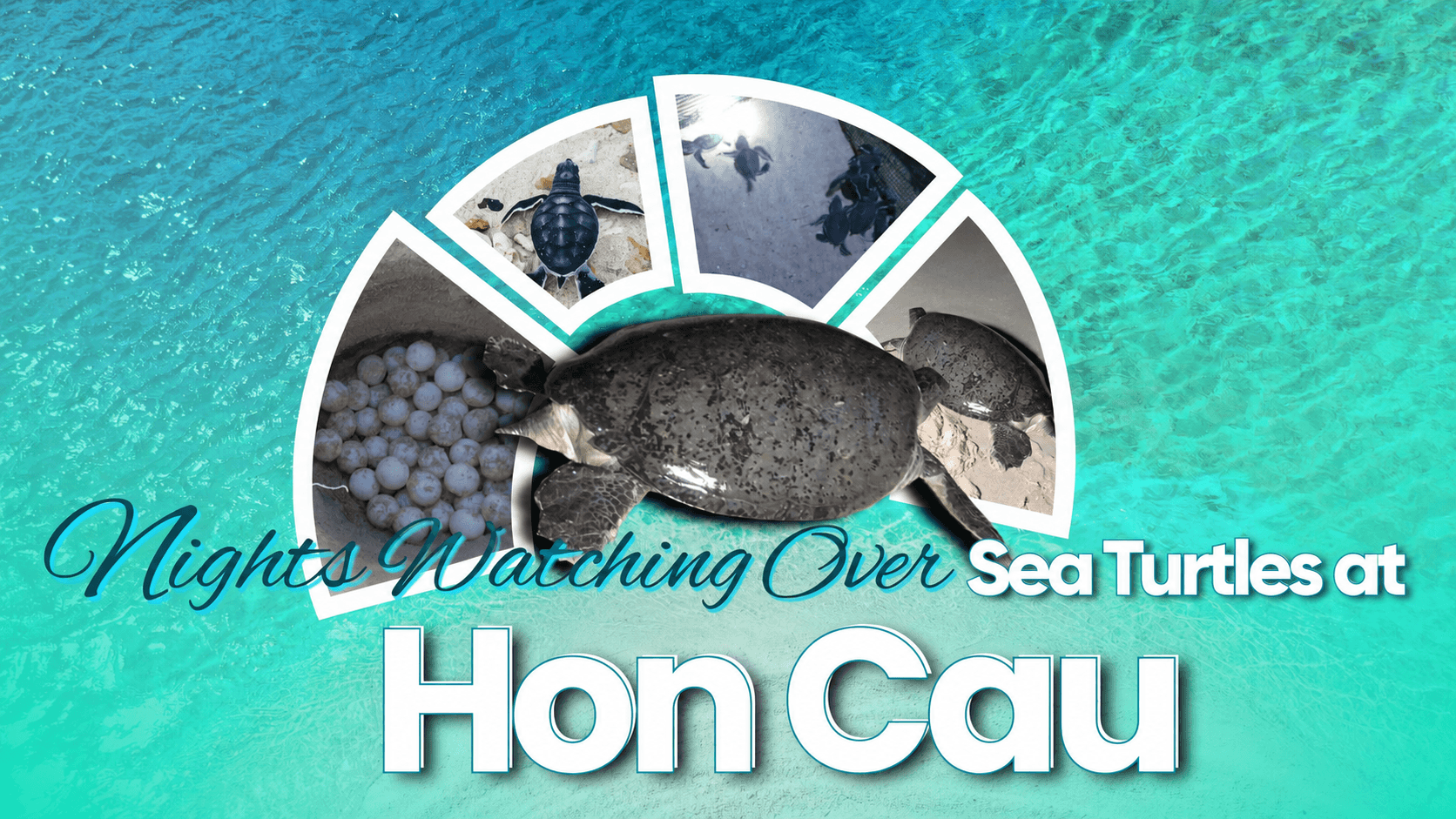
Nights Keeping Watch With Sea Turtles at Hon Cau
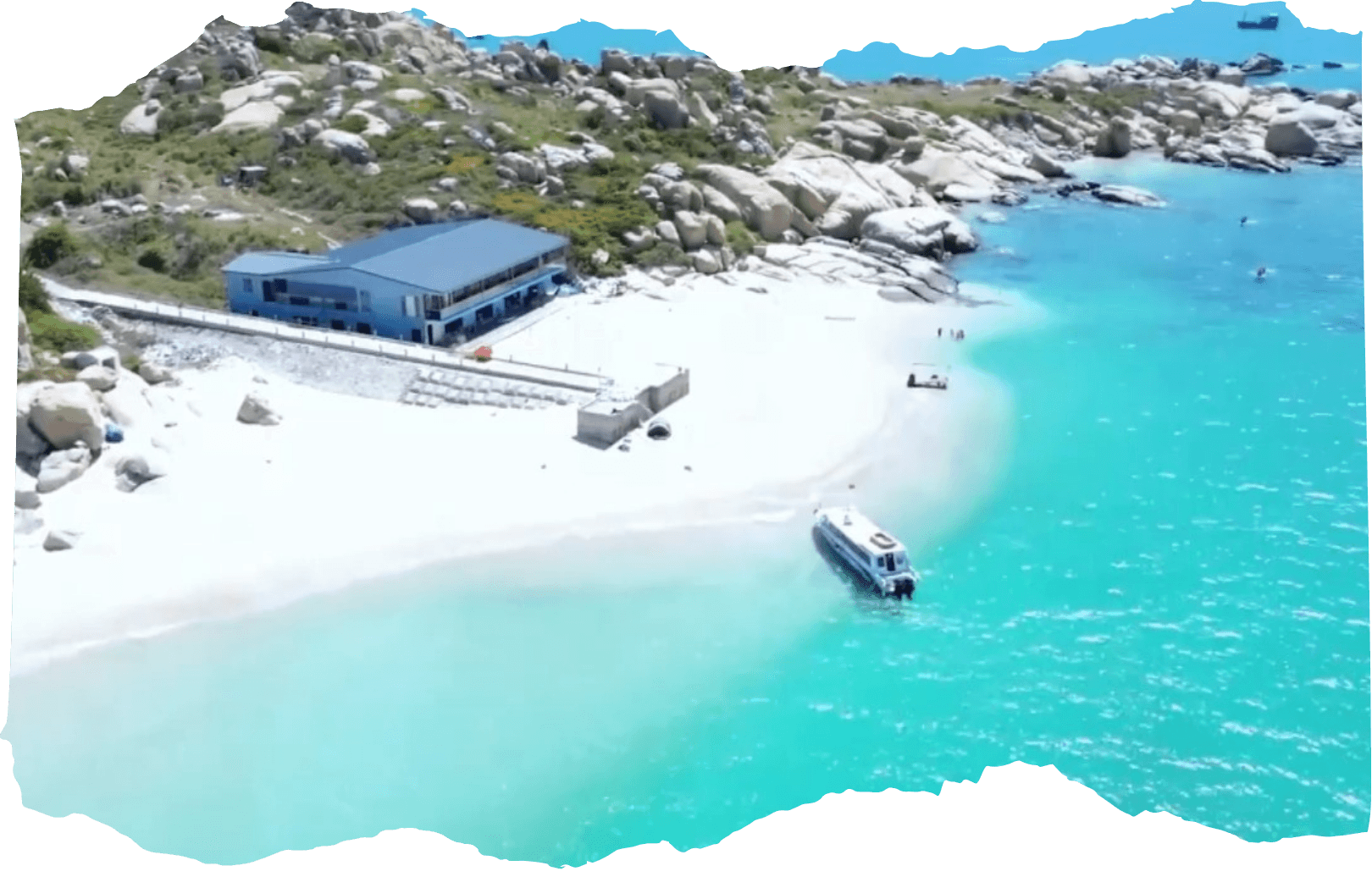
For years, the sea turtle guardians of Hon Cau Island, located in Lien Huong Commune, Lam Dong Province, have grown accustomed to a reversed rhythm of life. As night falls over the sea, their work quietly begins: walking along the sandy shore, waiting for the tracks of mother turtles returning from the ocean.
For years, the sea turtle guardians of Hon Cau Island, located in Lien Huong Commune, Lam Dong Province, have grown accustomed to a reversed rhythm of life. As night falls over the sea, their work quietly begins: walking along the sandy shore, waiting for the tracks of mother turtles returning from the ocean.

It is nearly midnight.
The sea around Hon Cau is pitch-black. Strong gusts of wind carry the salty scent of the ocean. Beyond the relentless sound of waves crashing beneath the island cliffs, almost no other noise can be heard. On the beach, a few dim red lights move slowly through the night.
No one uses white flashlights. No one speaks loudly. Those involved in sea turtle conservation at Hon Cau understand that even a sudden sound or an unexpected beam of light could startle a nesting female turtle, causing her to abandon nesting and return to the sea.
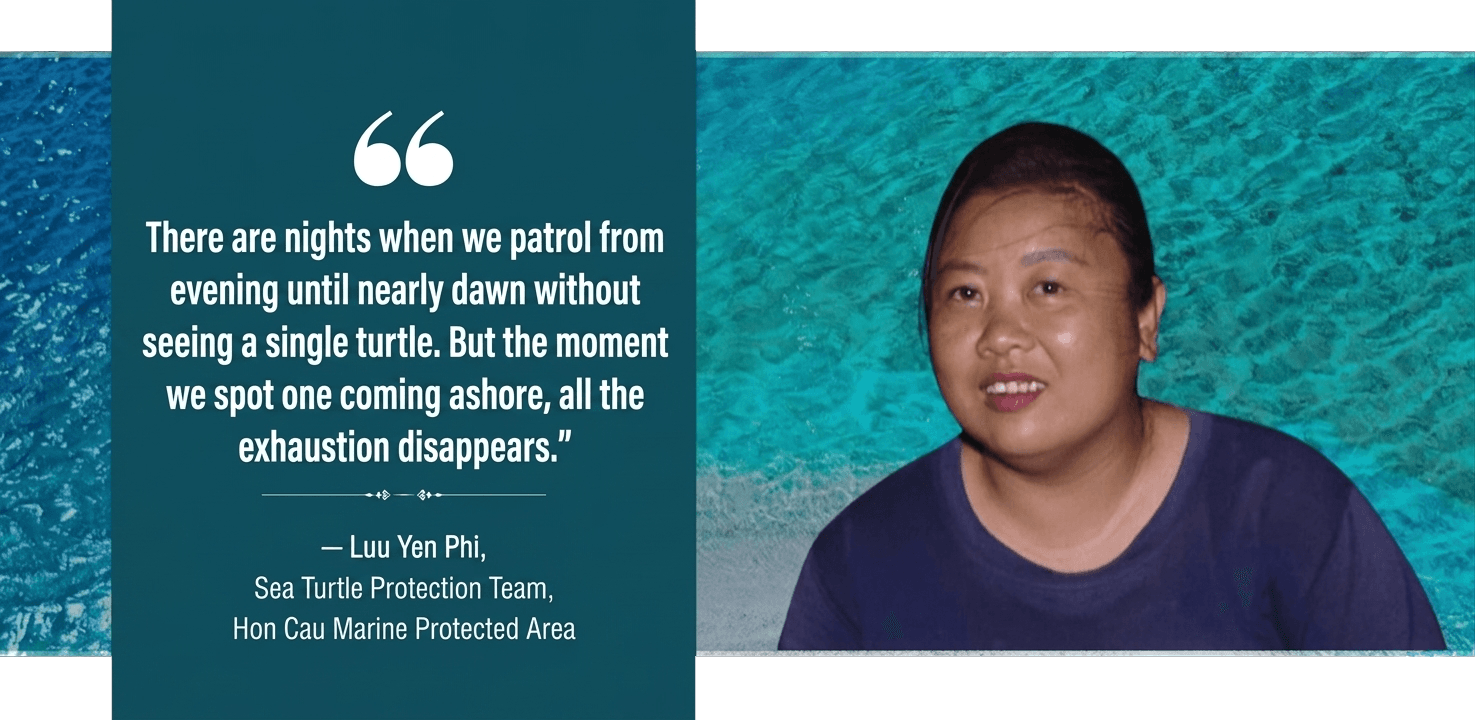
Luu Yen Phi, a member of the sea turtle protection team at Hon Cau Marine Protected Area, crouches low and shines a red light onto the sand. A fresh indentation appears beneath the faint glow.
“A new track,” she whispers softly.
.jpg)
Sea turtle tracks resemble two parallel wheel marks stretching across the sand. For conservation workers, simply observing the depth and direction of the marks is enough to determine whether a turtle has just come ashore or already returned to the sea.
Team members immediately dims their lights.
In the distance, a large dark shape slowly inches across the beach.
A mother turtle has returned.
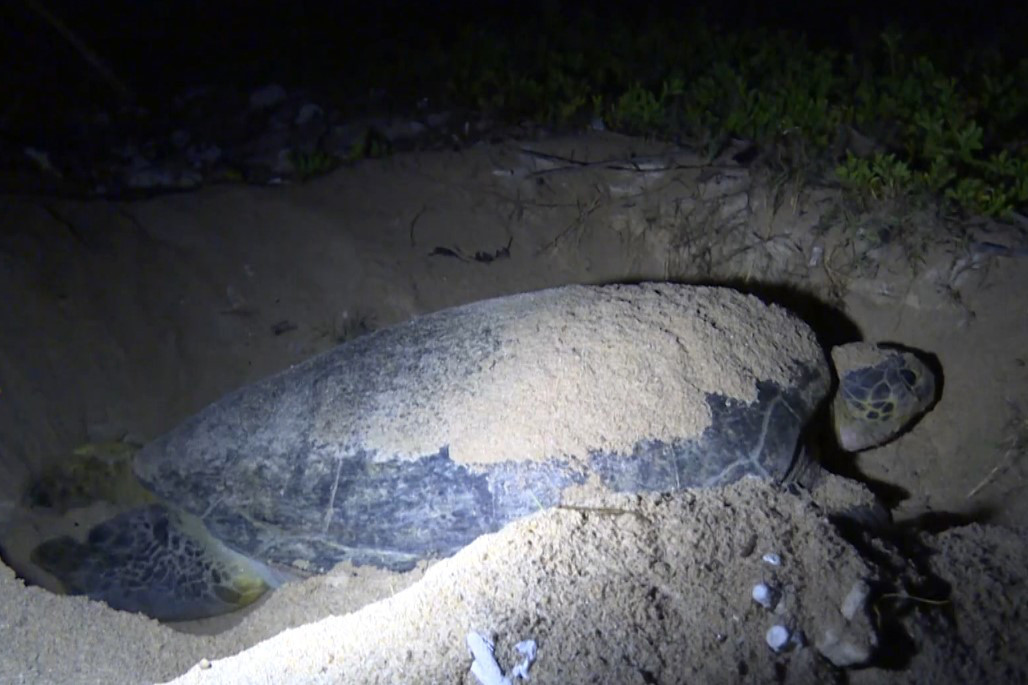
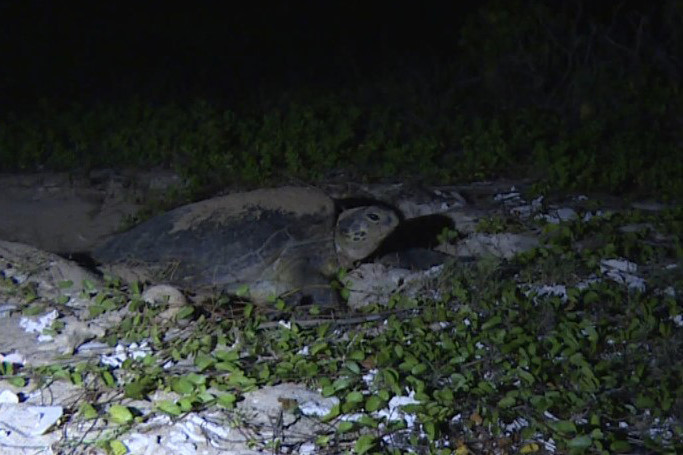
Even after witnessing countless nesting seasons, the night patrol teams at Hon Cau still feel the same excitement whenever they come across a nesting turtle.
.jpg)
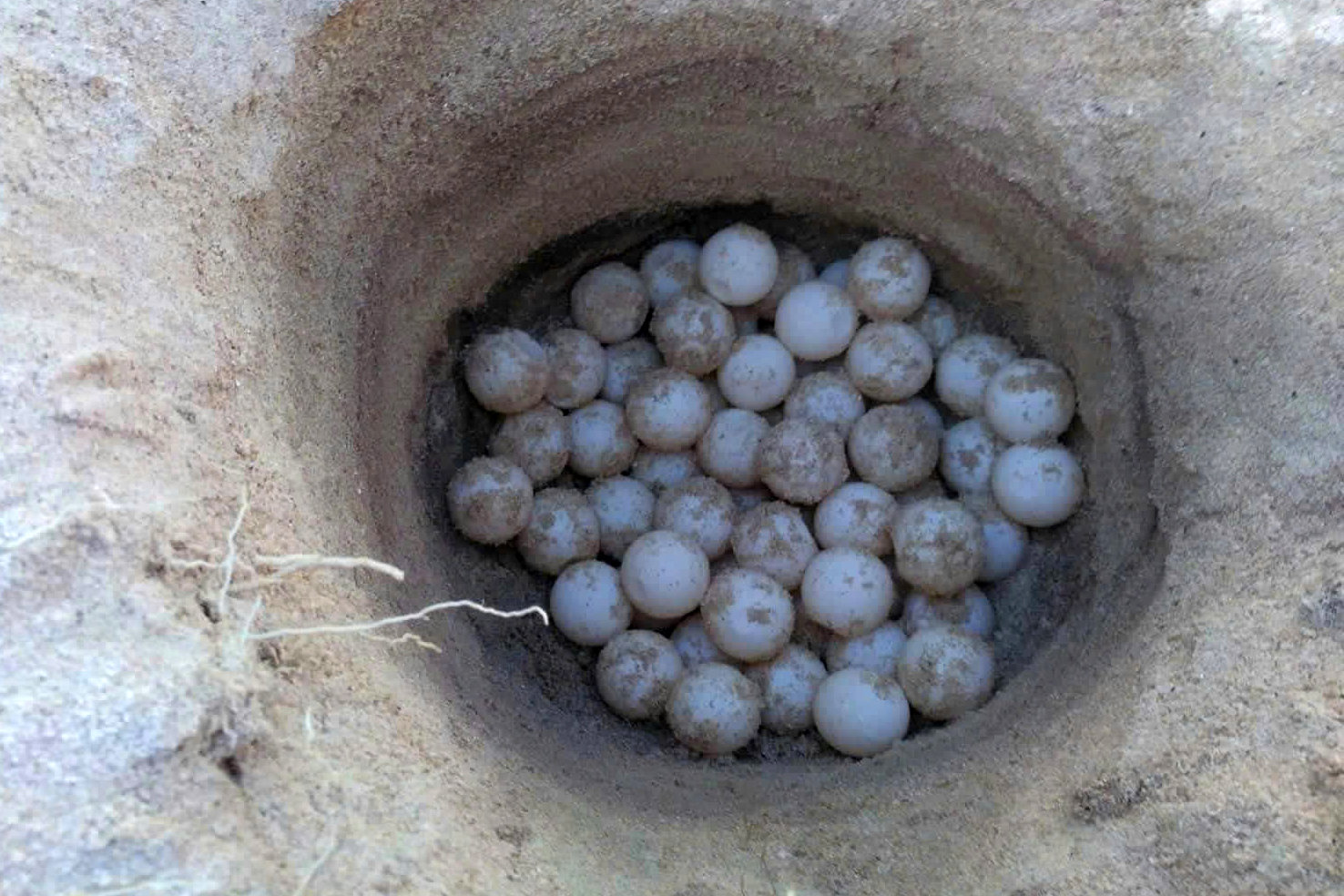
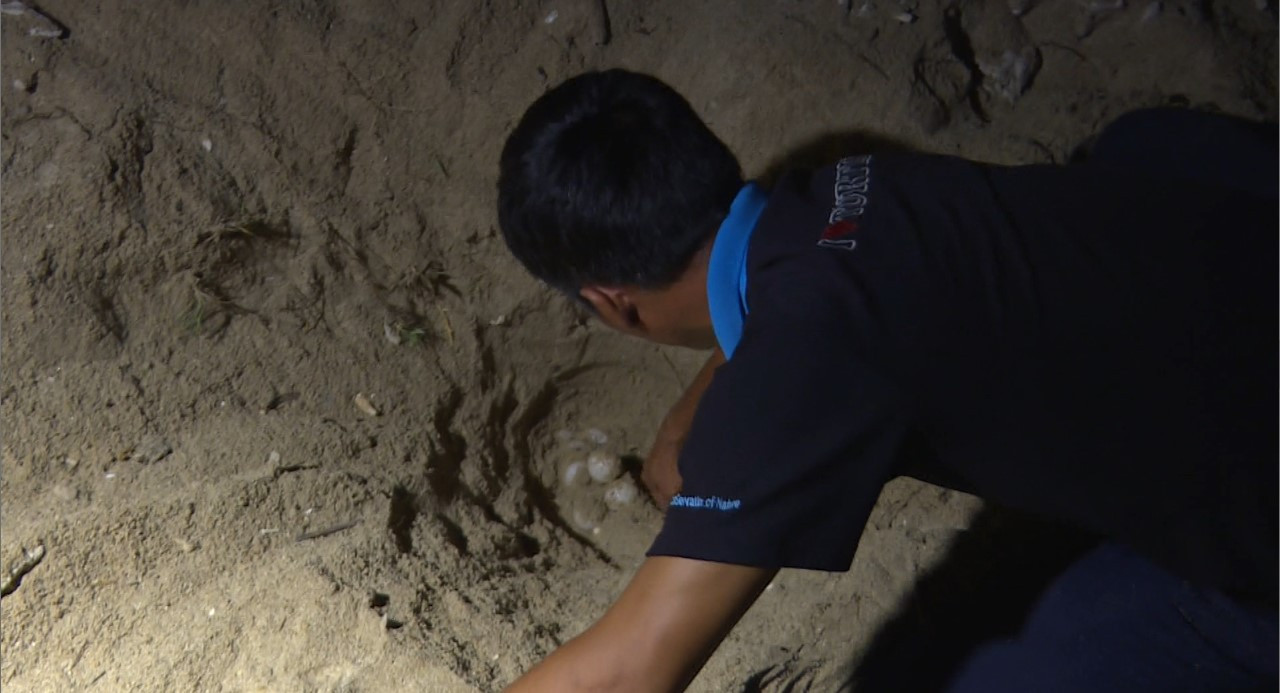
Slowly, the turtle uses her front flippers to dig into the sand. Each movement is heavy yet remarkably precise. Once the nest is deep enough, she begins laying eggs.
In near-total darkness, white eggs quietly fall into the bottom of the nest.
No one approaches. No one makes unnecessary noise.
Only the sound of waves and the soft rustle of falling sand remain.
“There are nights when we patrol from dusk until dawn without seeing a single turtle. But just one turtle coming ashore makes all the exhaustion disappear,” Phi says.
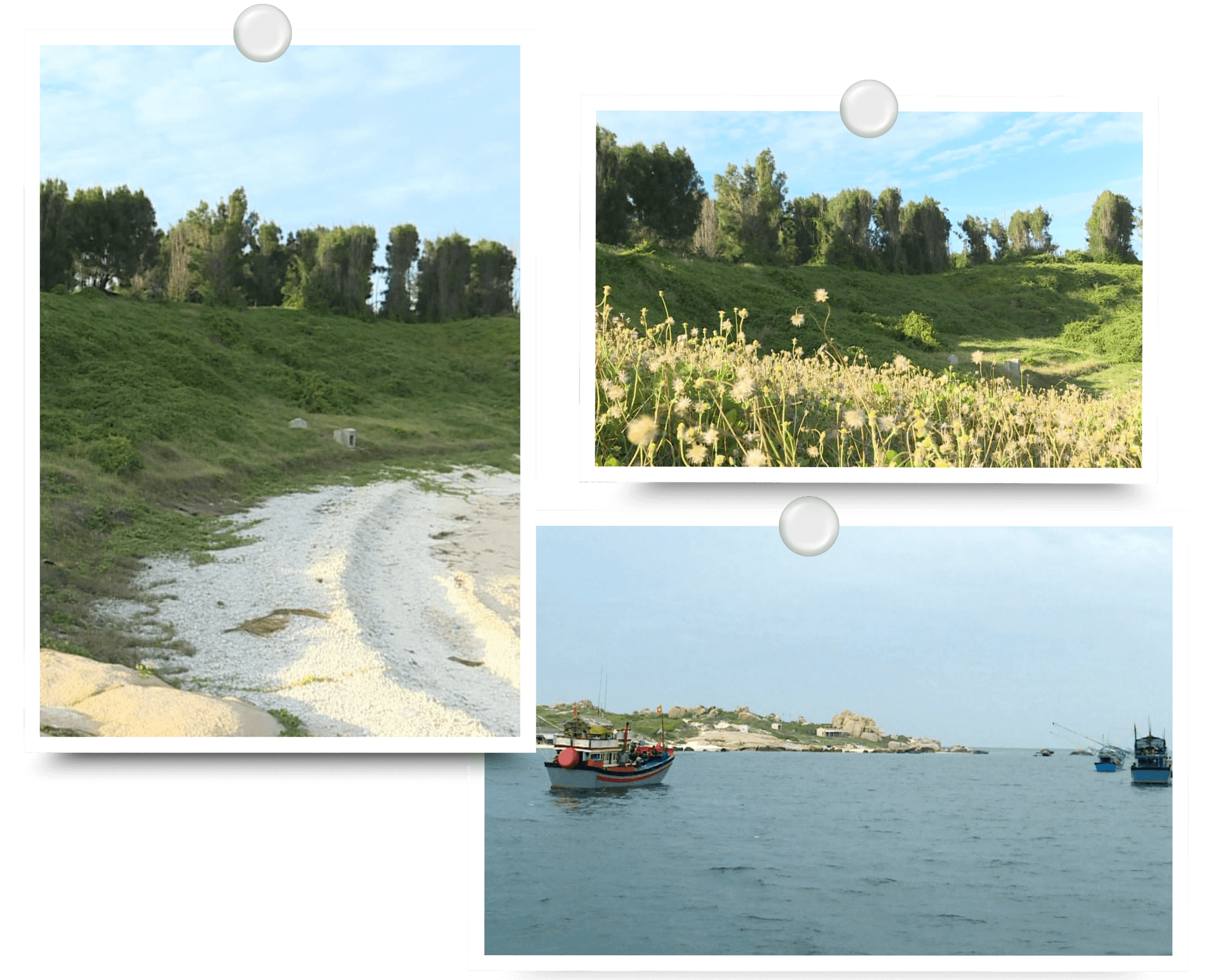
At Hon Cau, the turtle nesting season lasts from May to October each year. For conservation workers, it is also a season of countless sleepless nights.
Some nights the sea is rough. Other nights rain lashes across the beach. Yet patrol teams must continue their rounds. They understand that even a brief delay could mean a nest being washed away by waves or disturbed by predators.
.png)

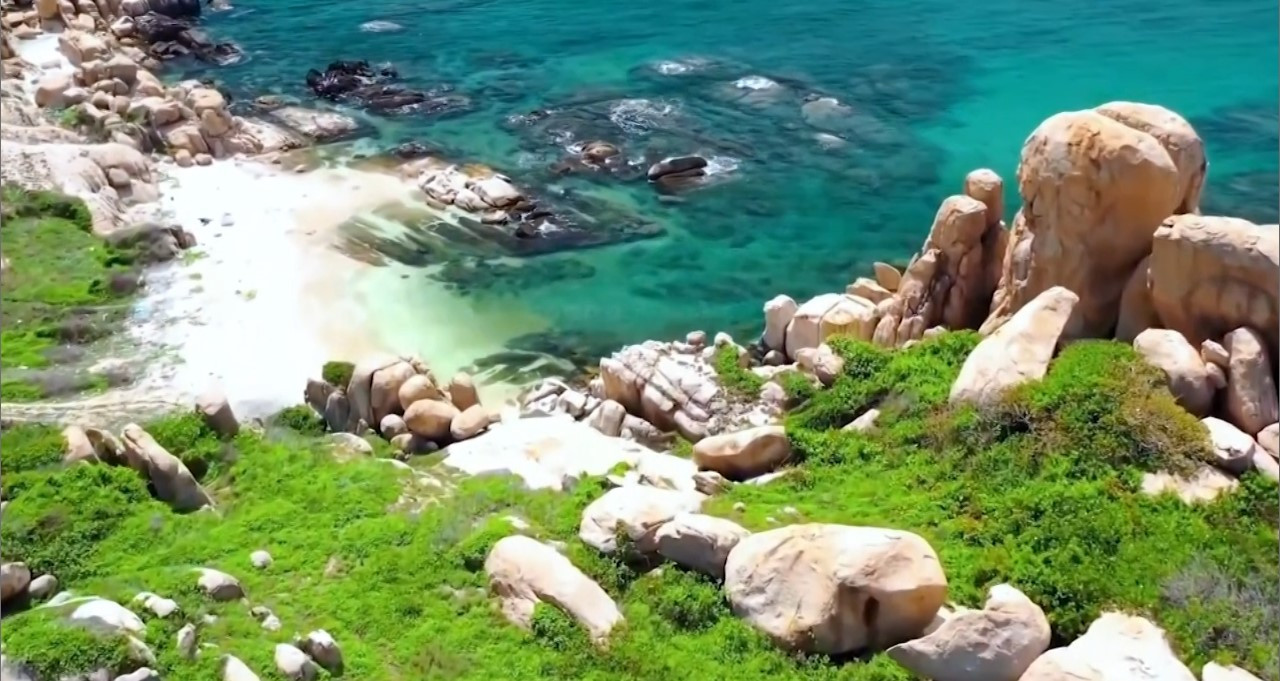
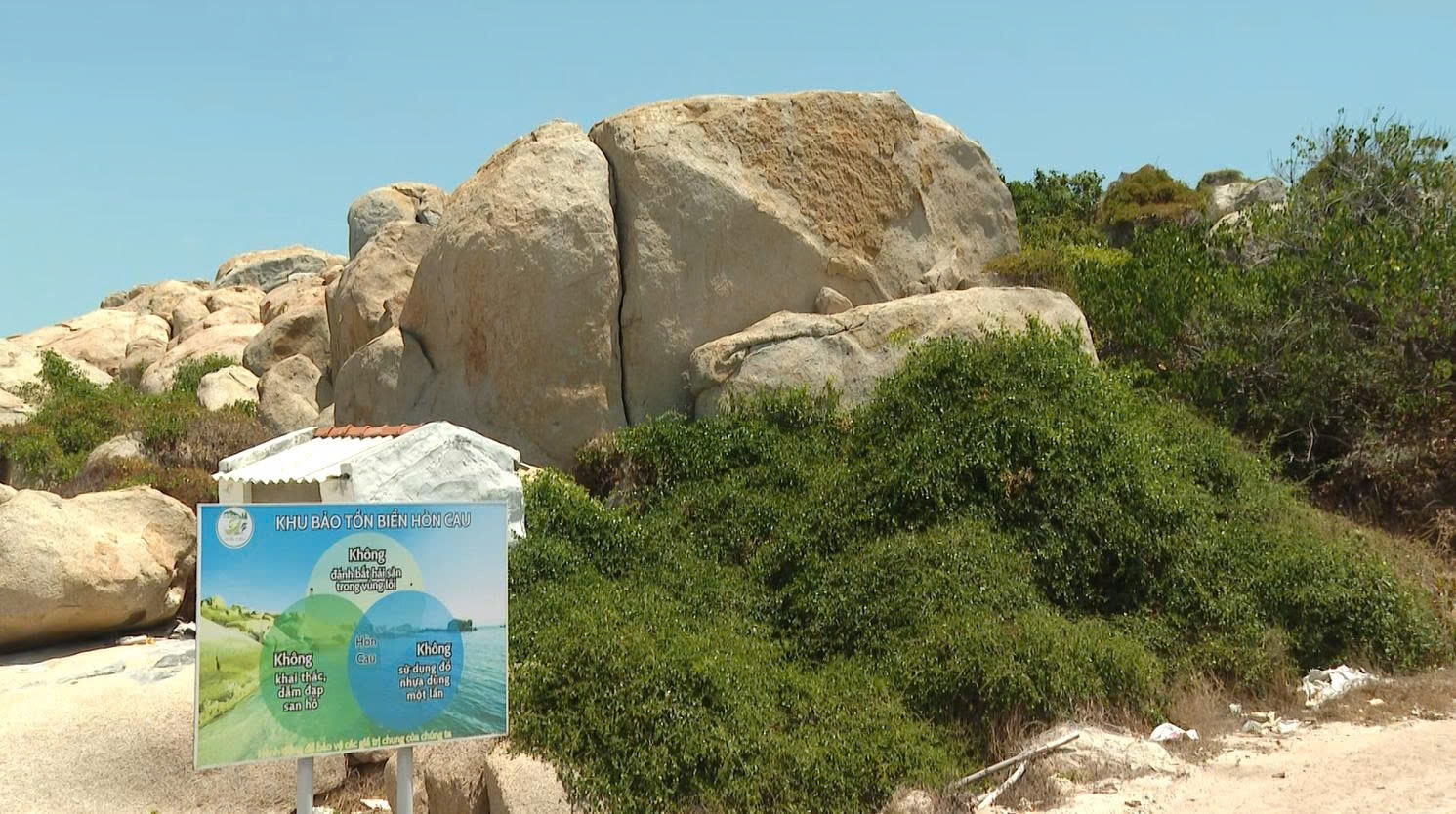
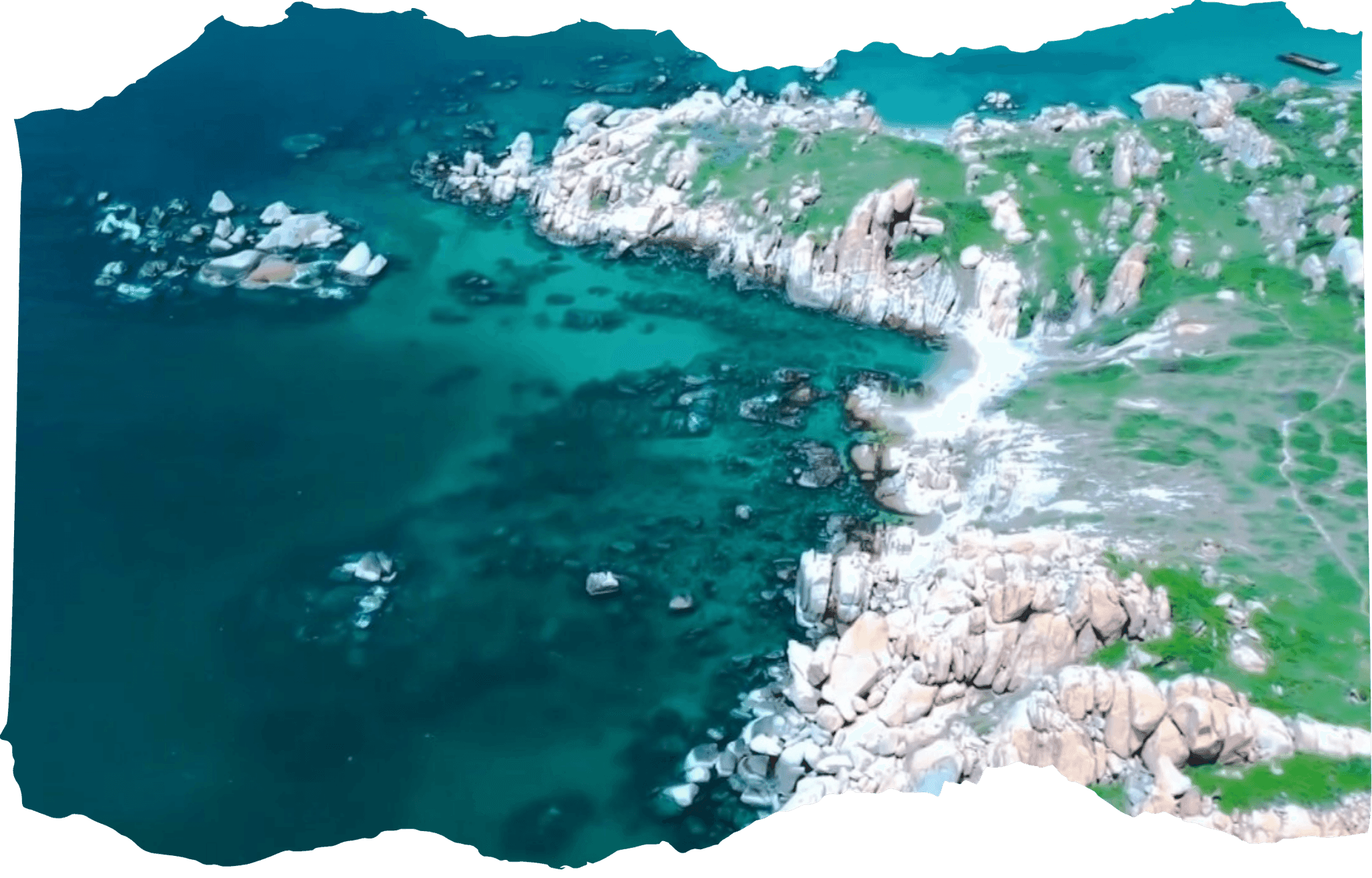
Covering approximately 12,500 hectares, Hon Cau Marine Protected Area is one of the few remaining coastal sites in Vietnam where sea turtles still come ashore to lay eggs.
For conservationists, these figures mean far more than statistics.
The return of sea turtles is considered a vital sign that the ecosystem here remains healthy enough to sustain life.
.jpg)
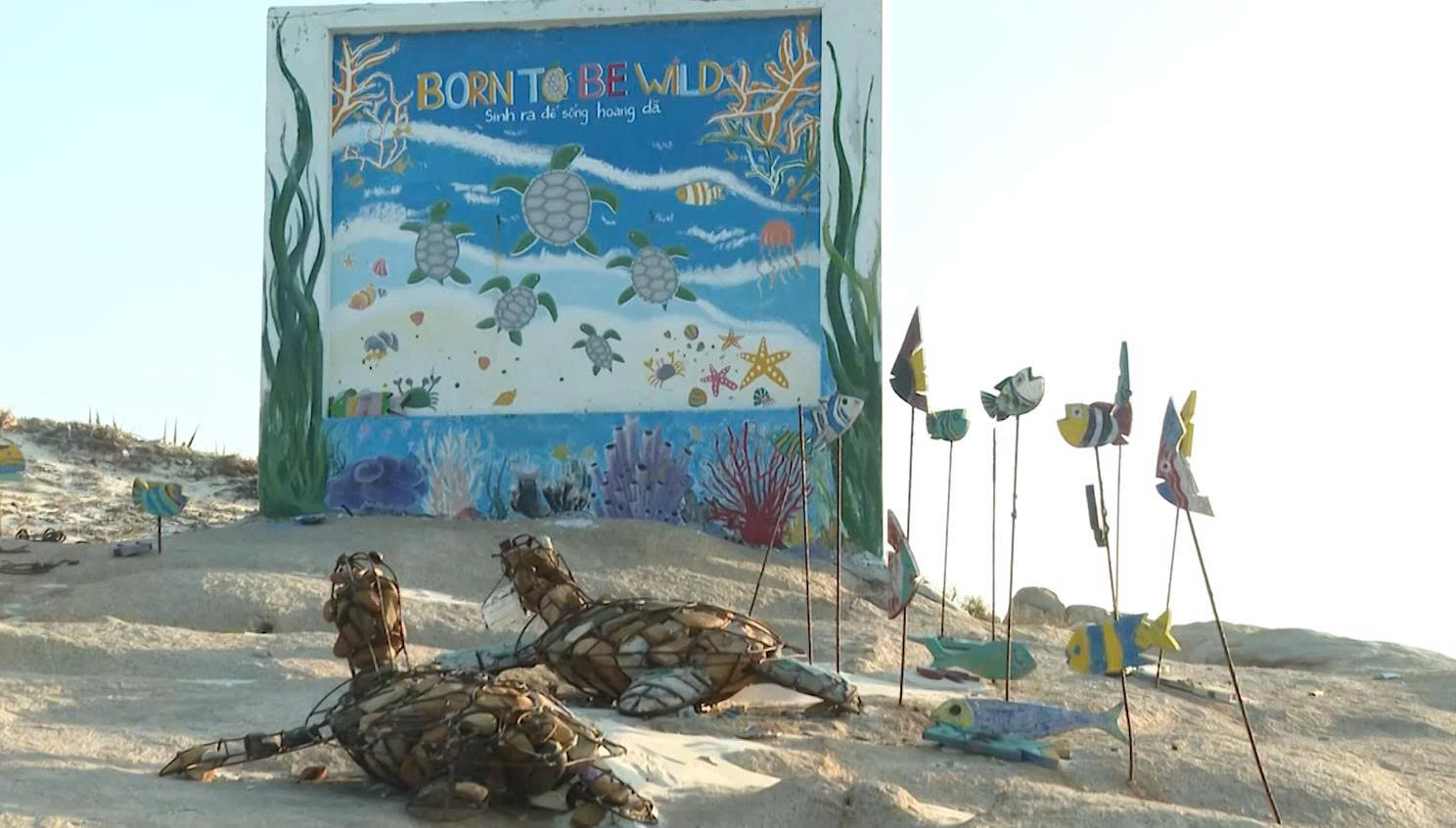
Beneath the waters surrounding the island, coral reefs and seagrass beds continue to survive, providing habitat for numerous rare marine species. Along the narrow stretches of sand, life quietly renews itself with every nesting season.
.png)
Nguyen Thanh Phuc, Acting Director of the Hon Cau Marine Protected Area Management Board, said that since 2013, conservation teams have recorded 82 turtle nests containing a total of 6,814 eggs.
.jpg)
There were years when no turtles came ashore to nest at all. “In 2019 and 2023, nesting activity was almost absent. Everyone was deeply worried,” Phuc recalls.
But the sea continues to offer signs of hope.
In 2017, Hon Cau recorded 15 nests containing 1,389 eggs — the highest figure documented in more than a decade of monitoring.
During the 2025 nesting season alone, conservation teams discovered seven nests containing 328 eggs.
“As long as turtles continue returning, this place still has hope,” Phuc says.
.jpg)
Once the mother turtle finishes laying eggs, the conservation team’s real work begins.
They measure the turtle’s shell, attach identification tags for monitoring, and gently guide her back to the sea. The eggs are then relocated to protected hatchery areas, where every nest is carefully marked.
Even the slightest changes in sand temperature are closely monitored, because for sea turtles, temperature not only determines hatching rates but also affects the sex ratio of hatchlings.
Bui Thi Thu Hien, Marine and Coastal Programme Manager of the International Union for Conservation of Nature (IUCN) in Vietnam, explained that temperatures above 29 degrees Celsius generally produce more female hatchlings, while cooler temperatures tend to produce more males.
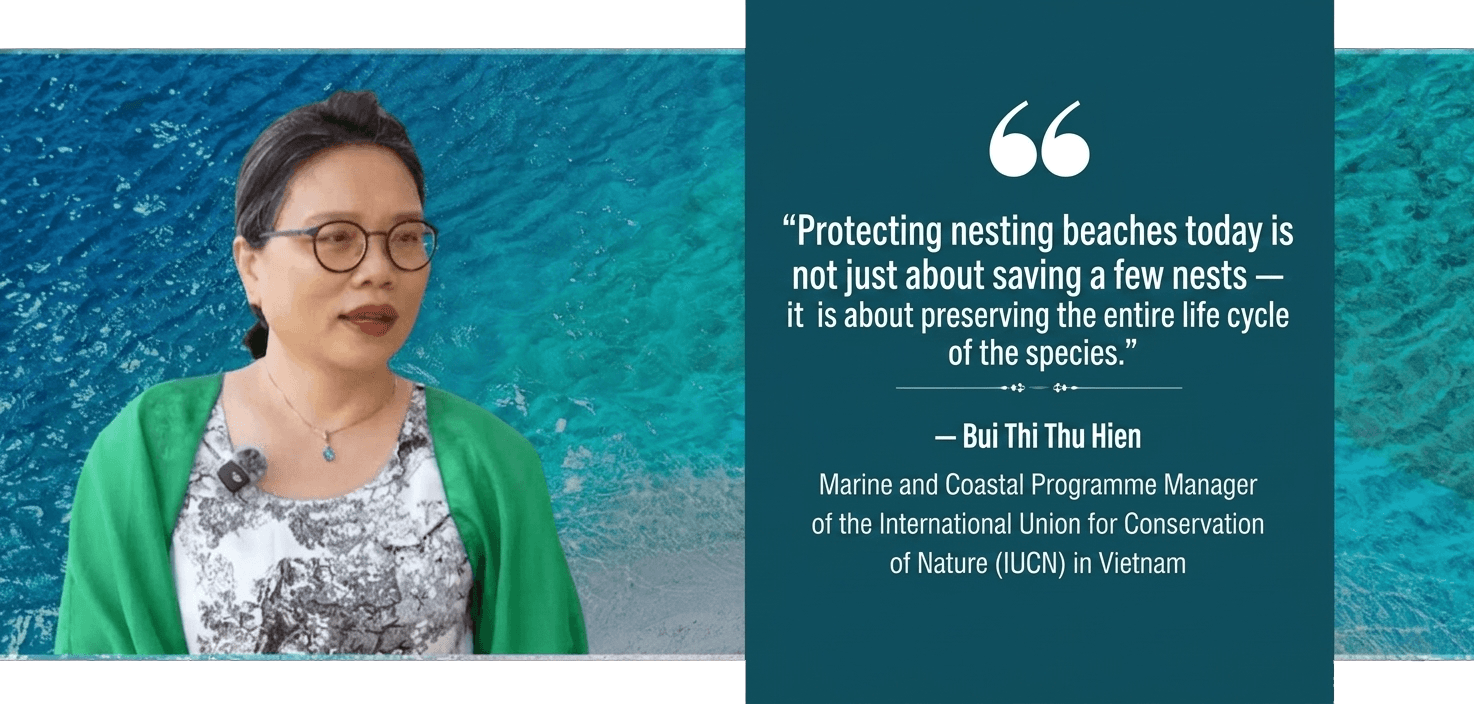
Amid rising sea temperatures and the growing impacts of climate change, maintaining stable natural nesting beaches has become increasingly difficult.
“Protecting nesting beaches today is not simply about saving a few nests — it means preserving an entire reproductive cycle,” Hien said.
.jpg)
After approximately 45 to 60 days, the sand begins to stir.
Tiny hatchlings, each no larger than a human palm, emerge from beneath the sand and instinctively crawl toward the sea.
In some seasons, hatching success rates at Hon Cau exceed 90 percent.
But for sea turtles, survival has only just begun.


At around 3 a.m., strong winds sweep across the shoreline.
Do Thanh Vinh, another member of the sea turtle protection team at Hon Cau Marine Protected Area, continues patrolling the beach alongside his colleagues.
.jpg)
For years, every nesting season has meant sleepless nights spent guarding nesting grounds, cleaning marine debris and transporting eggs to safe incubation areas.
.jpg)
“For us, it feels natural,” Vinh says simply. “The sea provides for us, so now we protect it in return.”
.jpg)
At Hon Cau, sea turtle conservation belongs to no single individual.
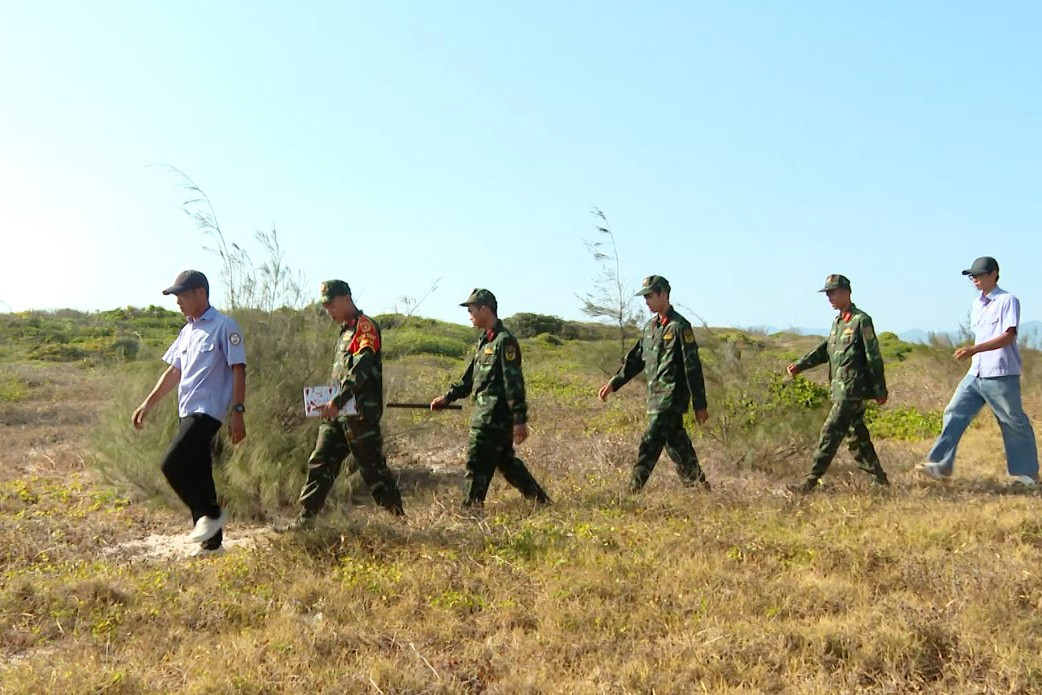
Alongside reserve staff are local fishermen, soldiers stationed on the island and community volunteers. Together, they form a quiet protective circle around the fragile nests buried beneath the sand.
Everyone understands that a female sea turtle may take 25 to 30 years to mature before returning to the very beach where she hatched to lay eggs.
Each protected nest today is, in many ways, a promise from the sea for decades to come.
.jpg)
Dawn slowly breaks.
The first streaks of light appear along the horizon.
On the sand, a newly emerged hatchling slowly crawls toward the waves.
The journey spans only a few meters.
Yet it is the first step in a life that may travel thousands of kilometers across the ocean.
No one knows whether, decades from now, it will return to this very shore.
Still, the turtle guardians of Hon Cau continue their nightly vigils.
Waiting for fresh tracks in the sand.
Waiting for another nesting season to return.
Content and photos by: Thanh Nhan - Huynh Hien - Lam Khoa
Design by: Nguyet Nga